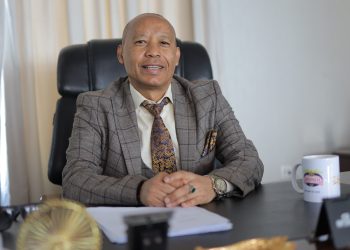



In recent months, Ethiopia has found itself at a crossroads as it grapples with the IMF’s recommendation to lift fuel subsidies as part of a broader effort to stabilize its economy. While the move is expected to ease the government’s fiscal burden, it comes with significant implications for inflation, the cost of living, and the most vulnerable segments of society. To gain a deeper understanding of these economic dynamics, Yared Nigussie of the The Reporter Magazine sat down with Abdulmenan Mohammed (PhD), a London-based financial analyst with 20 years of experience in the financial sector.
Abdulmenan shares his insights on the IMF’s advice, the potential long-term benefits and risks of phasing out fuel subsidies, and the urgent measures that need to be taken in order to protect Ethiopia’s poorest citizens during this challenging economic transition.
The Reporter Magazine: What, in your view, are the key economic rationales behind the IMF’s recommendation to lift fuel subsidies in Ethiopia?
RELATED POSTS


Abdulmenan Mohammed (PhD): International financial institutions, including the IMF, generally advocate for the removal of subsidies whether on electricity, petroleum, or other goods—because subsidies drain government resources and often contribute to fiscal deficits. Subsidizing petroleum, for example, requires significant funds that could be better used for social welfare or investment. In the IMF’s view, subsidies widen budget deficits, and governments should avoid them as much as possible.
What potential economic impacts do you foresee as a result?
Well, the impact largely depends on whether you look at it from the government’s or the public’s perspective. From the government’s side, lifting the subsidy will save a substantial amount of money that could otherwise be spent on fuel subsidies. However, from the public’s perspective, it will increase the cost of fuel, which in turn raises the cost of living. Inflation in Ethiopia is already around 17 percent, and removing the subsidy will likely push inflation higher. Given that the country is already experiencing economic slowdown, this policy change will make it more difficult for many people to meet their daily needs.
How do you think this policy will affect inflation and consumer prices, especially considering that increasing the cost of fuel also increases the cost of other products and services?
Fuel affects nearly every product in the economy, as transportation costs are directly tied to fuel prices. When fuel costs rise, transportation costs go up, and this impacts the cost of goods, including food, which is transported from rural farm areas to urban centers. This, in turn, increases inflation. Essentially, lifting the fuel subsidy will lead to a chain reaction that raises prices across various sectors of the economy, from transportation to basic goods and services.
With your extensive experience as a finance expert, how do you foresee this policy impacting Ethiopia’s fiscal deficit and public debt levels?
When the government subsidizes fuel, it incurs a significant financial burden, often requiring either domestic borrowing or external loans. If the subsidy is substantial, it increases the debt burden—both locally, from the National Bank of Ethiopia for example and internationally. The larger the subsidy, the more pressure it places on public finances. If the government reduces the subsidy, it will help lower borrowing and the overall debt load. However, as mentioned earlier, this comes at the cost of higher consumer prices and inflation.
Fuel price increases often cause market disruptions. Can you discuss the potential social implications of lifting the fuel subsidy?
Fuel price increases have a direct effect on inflation and the cost of living, which is why they often cause public panic. For example, higher fuel prices lead to more expensive transportation—both within cities and for goods moving across the country. This ultimately raises living costs. When subsidies are removed, the most vulnerable groups—particularly the poor—are the hardest hit. In Ethiopia, where inflation is already high, lifting the subsidy could make life even harder for millions of people. There was widespread dissatisfaction and protest in Nigeria last year when the government removed the subsidy, which serves as a prime example of the social impact such a decision can have.
Even some of the most developed countries continue to subsidize fuel. Why, then, is Ethiopia considering lifting the subsidy when it is still a developing country with a largely vulnerable population?
Subsidies are directly tied to the resources a government has. The U.S., for example, can afford to subsidize fuel because of its large economy and tax base. In contrast, Ethiopia faces a significant fiscal deficit and a small tax base, which makes it difficult for the government to sustain fuel subsidies. International financial institutions are pushing Ethiopia to reduce subsidies as a way to stabilize the economy. The decision to remove subsidies isn’t easy, but it’s largely a financial necessity, given the government’s limited resources. In 2015, even Saudi Arabia began reforming its fuel pricing system. Different countries have varying reasons for removing subsidies—some do it to reduce budget deficits, while others do it for environmental reasons. However, in Ethiopia’s case, the primary motivation is financial.
With Ethiopia’s economic challenges and income levels not improving significantly, is now the right time to lift the fuel subsidy?
It’s understandable that lifting the subsidy in such a difficult economic situation is challenging. Ethiopia is facing high unemployment, inflation, and slower economic growth. Even international financial institutions have recognized the need for safety net programs to protect the vulnerable during such transitions. In fact, the IMF has emphasized the importance of accelerating safety net initiatives, but there have been delays. The government must act quickly to support the poorest segments of the population if the subsidy is to be removed.
What are the long-term benefits and risks of phasing out fuel subsidies?
In the short term, the immediate impact will likely be higher inflation and possible political discontent, especially since people are already struggling economically. However, in the long term, the funds saved from fuel subsidies can be redirected toward essential infrastructure development, such as roads, healthcare, and education—investments that can support sustainable growth. The key is to avoid flashy or wasteful projects and ensure that these funds are used productively.
How does this move align with Ethiopia’s broader economic reform agenda?
The IMF and other international institutions are advocating for a market-based economic system, where the government reduces its intervention in sectors like fuel pricing. Lifting the subsidy is part of this shift. The government, since 2005, followed an interventionist approach, controlling prices and investing heavily in various sectors. Another example is the government’s control over the pricing of various products, including petroleum. However, international financial institutions advocate for a market-driven economic system where prices are determined by supply and demand, without government intervention. By removing the subsidy and aligning fuel prices with international standards, Ethiopia is aligning with the IMF’s economic reform agenda. This shift represents a move away from an interventionist approach toward a market-based system, which has been evident in other sectors as well. For instance, consider the example of treasury bills: previously, the government set interest rates, but now the rates are determined by market forces. In the past, the government set the interest rates on treasury bills at around 1% or 2%. However, for the past few years, the government has adopted a market-based system, and the interest rate is now determined by supply and demand, standing at 15%. The belief is that prices set by the market are more efficient. Subsidizing products or services, on the other hand, leads to inefficiency and requires additional resources to sustain. International creditors are opposed to this kind of system, as subsidies often rely on resources that must be sourced from elsewhere. Essentially, if the government subsidizes petroleum, someone must bear the cost, typically through taxes, borrowing, or money printing—practices that are not supported by international lenders. The core belief is that when you receive a service, you should pay the price, which is the logic that drives these financial institutions.
The IMF has criticized Ethiopia for not adequately supporting the most vulnerable groups through safety net programs. What role do you think international financial institutions should play during this transition?
The IMF has already provided Ethiopia with a $3.4 billion loan to stabilize the exchange rate, build foreign reserves, and support the budget. While this loan comes with low-interest rates and a long repayment period, it’s not a quick fix. The IMF, along with other development partners, can provide financial and technical assistance to help Ethiopia through this transition. In this regard, the IMF is providing financial support, potentially including technical assistance. Additionally, institutions like the World Bank and other development partners have pledged over $10 billion in financial aid. However, it remains uncertain whether these funds will be fully disbursed. However, the real issue is the timely implementation of policies to protect the most vulnerable populations.
Given that the poor will bear the brunt of this change, what steps can the Ethiopian government take to mitigate the negative effects on vulnerable households?
Even international institutions recognize the need to support the poor during economic reforms. The government must expedite the implementation of the safety net program and other targeted subsidies to help vulnerable households. Additionally, other measures, such as the proposed salary increases for civil servants and subsidies for essential goods, should be rolled out quickly to alleviate the burden on the most economically disadvantaged.
Can you provide examples of other countries that have successfully implemented similar fuel subsidy reforms, and what lessons can Ethiopia learn from them?
Egypt is a good example. It underwent a similar reform process in the past decade, which involved lifting fuel subsidies as part of a broader economic reform package. While the transition wasn’t without challenges, Egypt’s experience highlights the importance of clear communication with the public and implementing targeted subsidies to protect the most vulnerable. Ethiopia can learn from this by improving public consultation and communication about the reasons for the subsidy removal. Furthermore, while these reforms may not be sustainable in the long-term, a temporary safety net program for the poorest could ease the transition.