
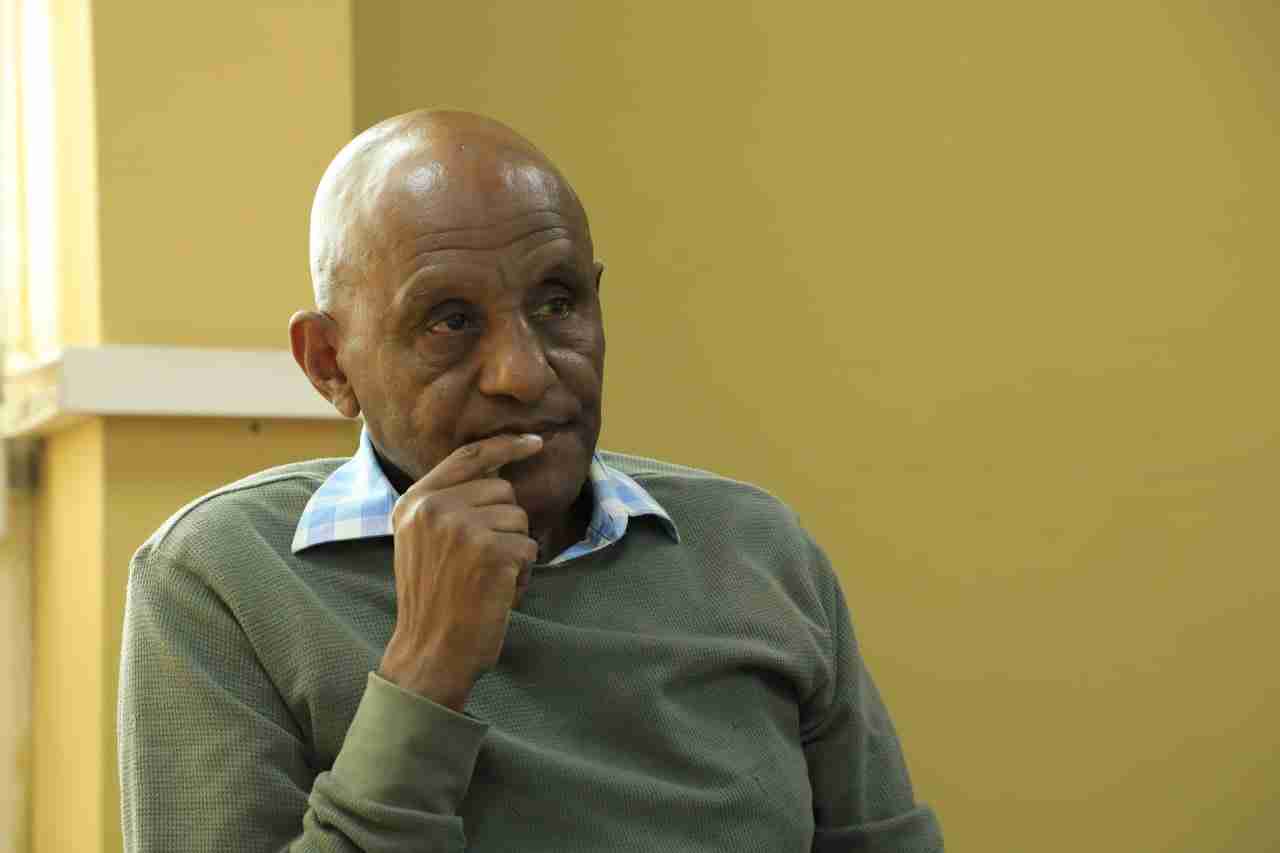

Abera Hailemariam has a diverse and fascinating academic history. He holds two bachelor’s and two master’s degrees, spanning law, philosophy, peace and security, and development studies from both local and international universities. Most relevant for this interview, he specialized in electoral policy and administration during his studies in Rome.
Beyond his academic and research work, Abera brings hands-on field experience to the table. He has served as an election observer in other countries, including Nigeria and Zambia. Currently, he serves as the Executive Director of the Coalition of Civil Society Organizations for Election. The Reporter Magazine’s Bewket Abebe spoke with him about the role of civil society in the pre-election phase, the participation of Internally Displaced Persons (IDPs), and other critical issues. EXCERPTS:
The Reporter Magazine: With only days left until the seventh general election, what do you feel has been done well so far in terms of conducting a meaningful general election, by the Election Board, the parties, civil societies, and the voters themselves, and what still needs to be addressed?
RELATED POSTS

Abera Hailemariam: If I were to comment on the work of the Board or other groups right now, it would preempt our observation efforts. This kind of assessment should only be reported after we have carried out all three phases of the electoral process: pre-election, election day, and post-election. It is simply too early for such an assessment of the process as a whole, and our standard operating procedures do not allow us to do so.
Feel free to focus on the coalition’s work. Through your description, we can get a picture of the overall pre-election process particularly about the participation of CSOs.
Yes, it is highly appropriate to highlight what our organization—the Ethiopian Civil Society Coalition of Organizations for Election—has been doing. Established in 2019, the coalition observed the 2021 general elections and the Sidama referendum. Subsequently, we monitored several other referendums and the 2024 local elections.
Our coalition comprises 119 civil society organizations across the country, including in Tigray and the Somali regions, all of which provide us with observers. We allocate recruitment quotas to these member organizations, and we then train and deploy the selected citizens to collect field data.
Regarding our work over the past year, we have been closely observing the pre-election phase. This includes monitoring the preparatory framework, voter registration, the civic space, campaigns, and debates.
We have also been running a voter education campaign under the motto ‘I Vote.’ We broadcast this campaign across mainstream media outlets in various local languages, while using social media platforms to target first-time voters. Our outreach focuses on registration requirements and uses educational drama to encourage political participation.
Additionally, a core focus of our campaign is amplifying the voices of female candidates and promoting women’s participation. Through our dedicated radio program, Yesua Dimts(Her Voice), we organize debates, host interviews with candidates, and invite experts to discuss what is needed to truly empower women.
Based on your campaign trail, how do you assess the public’s response and enthusiasm toward the seventh general election?
Again, it is simply not the right time to share those details, as the assessment is part of an ongoing observation. We deploy two broad categories of observers: long-term observers and short-term observers.
Our long-term observers began their work as early as August 2025 to assess the legal framework, candidate registration, voter registration, the campaigns, debates, and the overall civic space. This is a comprehensive observation process that will be reported as a whole. While we do not report individual incidents in isolation, we made an exception for voter registration and singled it out simply because that phase of the process has already been completed.
The pre-election phase, which should indicate the level of voter enthusiasm, is almost over.
The pre-election phase encompasses both the campaign period and the quality of public debates; these elements are closely interconnected. We reported on voter registration early specifically to provide immediate feedback to the election management body. During that phase, we identified practices that ran contrary to the law.
For instance, the presence of unauthorized security forces at polling stations during voter registration violates electoral laws. The law explicitly dictates that only regular police may be present, and even they should only enter a station if requested by an election official.
Additionally, the law strictly prohibits establishing polling stations in certain locations, such as political party offices, health centers, and private residences. We discovered polling stations set up in these restricted areas and formally advised the Board to ensure these violations are not repeated on election day.
When do you plan to release what you referred to as a “comprehensive report”?
We will release our findings immediately after election day. Specifically, we will issue a preliminary statement about two days after the election, followed by a comprehensive report once all phases—including the post-election phase—are complete. Some activities are still ongoing, and things can change rapidly right before the vote. We have to wait and see; in an election, a single day is enough to alter everything.
How do you assess the availability of funding compared to previous elections?
Funding is significantly lower than in the past, though I do not have the exact figures. There is a scarcity of funds compared to 2021. Organizations like USAID and IRI, which were major supporters of voter education, are currently less active or absent. Current support relies heavily on just a few sources, including the UNDP, the National Election Board, and EAS.
While 169 organizations secured accreditation for voter education, many lack the funds to carry it out. This scarcity affects the reach of voter education, which is vital for reducing spoiled ballots and increasing turnout.
In your report, you mentioned deploying 522 observers to cover allregional states[except for Tigray and the contested Wolqait area] and the two city administrations. How would you describe the overall environment?
Generally, the process was smooth, but there were problems that needed attention. These include the presence of security forces, the establishment of polling stations in prohibited areas, and the registration of individuals without proper ID or testimony. We also observed proxy registration, which is not allowed by law. Accessibility is a very serious issue, as a lack of convenient access can lead to the disenfranchisement of persons with disabilities, the elderly, and women with children. If the “push factor” is greater than the drive to vote, people will simply go home.
Regarding the security situation, the board reported that 97 percent of constituencies in Amhara and Oromia have an enabling environment. Based on what your team saw on the ground and your overall assessment, how convincing do you find this claim?
We deploy observers wherever polling stations are established and electoral materials are available. While we have observers stationed in the Amhara region, they are not present at every single site. In some areas, invasive security searches during travel made our observers deeply uncomfortable—even to the point of being hesitant to carry their observation checklists. There have also been reported incidents of abductions and killings in a few localities.
Regarding the 97 percent figure, I cannot offer a personal opinion. Our observation methodology is entirely data-driven; we must thoroughly verify and analyze our field data before arriving at any such conclusion.
Did your observation mission cover IDP camps? Of the 4,396 total polling stations you reported observing, how many are specifically meant for IDPs?
We did not specifically target IDPs; rather, we used the 547 constituencies as our primary unit for deployment. We reached as many constituencies as possible, excluding the Tigray region and certain ‘no-go’ areas due to security constraints—ultimately deploying to 522 out of the 547 constituencies. While we observed IDP camps in the Somali region back in 2021, we are currently acting as generalist observers looking at the broader electoral process.
However, true inclusivity requires that no one be left behind, including marginalized groups such as women, persons with disabilities, and IDPs. Deliberate effort must be made to ensure their voices are represented, as the right to vote is, ultimately, an individual right.
Conceptually, how should the issue of IDP voting be approached?
This is a very controversial and tricky area. Elections are fundamentally about representation, but IDPs who have been away for five years may no longer know the candidates running in their places of origin. Conversely, if they vote in their host communities, local residents might fear that the influx of new voters will alter the election outcomes or disturb the local political equilibrium.
There is also the logistical dilemma of securing and transporting ballots back to their places of origin, a process that is highly time-sensitive and difficult. Voting must be a meaningful process, not just a shallow ritual where people are instructed to cast a ballot without genuinely understanding their interests.
In my opinion, if IDPs reside in a location for more than a year, it might be better for them to vote in that host community as full citizens—provided this is managed through careful legislative measures to avoid local conflict. Ultimately, we simply cannot turn a blind eye to the sheer scale of displacement in this country.
Based on your international exposure, what are some global best practices for addressing these issues and ensuring the political rights of IDPs?
To be completely candid, I haven’t personally encountered global models that directly map onto our current situation, primarily because IDP dynamics elsewhere tend to be quite different. In many parts of the world, displacement is shorter in duration. For instance, if people are displaced by a natural disaster, they generally return home and rebuild their livelihoods once the crisis passes.
In Ethiopia, however, a complex mix of factors means that IDPs remain displaced far longer than expected—sometimes to the point where they lose connection with their places of origin. There is a stark contrast between standard global experiences and the protracted reality we are facing here on the ground.