


As global humanitarian development financing undergoes a profound transformation, international aid organizations are being forced to rethink how they back vulnerable communities. With traditional donor funding shrinking and emergency assistance increasingly taking precedence over long-term development, Mercy Corps has responded by shifting its strategy toward market-based solutions, private sector partnerships, and locally led resilience.
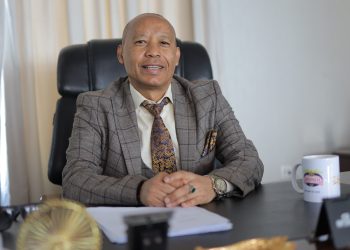
In this interview with The Reporter Magazine’s Yared Nigussie, Mercy Corps Ethiopia Country Director Edwin Kuria discusses how the organization is adapting to the changing landscape, why it believes strengthening markets can help communities build more sustainable livelihoods while reducing the dependency on aid , and how initiatives such as the Delivering Resilient Enterprises and Market Systems (DREAMS) and Resilience in Pastoral Areas (RIPA North) programs are helping pastoralists and displaced communities build more resilient livelihoods. He also outlines Mercy Corps’ priorities for the coming years—from food security and economic opportunity to water security and peacebuilding—and explains why anticipatory action and private investment will be central to Ethiopia’s development future. EXCERPTS:
RELATED POSTS


The Reporter Magazine: UNOCHA statistics indicate that humanitarian response plans across East Africa are critically underfunded. Simultaneously, Mercy Corps’s leadership noted that the organization has faced an unprecedented 40 percent contraction in global foreign aid funding. As Country Director managing one of Mercy Corps’ largest portfolios, how is this macro-resource deficit reshaping your operations in Ethiopia, and what programmatic trade-offs are you forced to make on the ground?
Edwin Kuria: Mercy Corps has been working in Ethiopia for the past 21 years, addressing the impacts of conflict and climate change. We recognize that these two factors will continue to be the main drivers of humanitarian need and vulnerability in the years ahead. Our work focuses on four key outcome areas of food security, economic opportunity, water security and peace and good governance.
Over the past two years, we have witnessed a significant global shift in both humanitarian and development financing. Many multi-year development programs have either been discontinued or are coming to an end, while funding priorities have increasingly shifted toward life-saving humanitarian interventions.
Across all our programs, Mercy Corps operates on a core principle: aid should strengthen markets rather than replace them. That has been the most significant shift in our approach. We have adapted by designing solutions that are closely linked to markets instead of relying solely on direct assistance handouts that can create long-term dependency.
The most important trade-off we have made as an organization is to prioritize market-based solutions. We are working more closely with private sector actors to help fill critical service delivery gaps that have become increasingly evident as development funding has declined. This approach allows us to support communities in ways that are more sustainable and resilient over the long term.

How are you dealing with the critical shortage of funding?
Our diversified funding base has helped us sustain much of our country’s portfolio. However, the stop-work order in January 2025 and funding cuts have affected some programs and required making some tough decisions on staff reduction.
At the same time, we are expanding our partnerships with the private sector, philanthropic foundations, and development finance institutions. That represents the major shift in our fundraising strategy. We are repositioning our existing programs to attract support from a broader range of non-traditional donors, ensuring both their continuity and long-term sustainability.
Your report shows a roughly 40 percent decline in global foreign aid and humanitarian funding. Are you saying that this funding shortfall has had a critical impact on humanitarian operations and that the response has fallen far short of what is needed?
At the global level, Mercy Corps has had to make difficult strategic and operational decisions in response to the contraction in aid funding.
In Ethiopia, however, the biggest impact has been on our workforce. Following the stop-work order, we had to reduce our staff, particularly those whose positions were fully funded by affected programs. Since then, we have been adjusting our operations as the situation evolves.
We have also taken a close look at our internal efficiencies and processes, and we are working with more local partners than before. These changes have enabled us to continue delivering our programs in Ethiopia despite the funding challenges.
The United States, through USAID, was a major funder of humanitarian and development programs across the country. Following the Trump administration’s decision to terminate USAID’s activities, many of those programs were disrupted. How has this affected your operations, and what measures are you taking to address the funding gap left by USAID’s withdrawal?
The influence of the US in Ethiopia’s humanitarian and development sectors cannot simply be replaced. However, we are seeing new donors entering the space. For Mercy Corps, the biggest shift has been our growing engagement with the private sector. We are working much more closely with private sector partners than we did before, and that has become a key part of our strategy.
Life-saving humanitarian interventions continue, but our priority now is to revive our resilience and long-term development programs by securing support from foundations and development finance institutions. Across our portfolio, we currently work with nine donors, including philanthropic foundations, institutional partners, and private sector donors. Diversifying our funding base has been essential to sustaining our work and reducing reliance on any single source of financing.
The multi-year DREAMS (Delivering Resilient Enterprises and Market Systems) partnership alongside Village Enterprise focuses heavily on the Dollo Ado region. What concrete systemic insights have emerged from combining a 12-month poverty graduation model with market systems development (MSD), and how does integrating these two distinct frameworks actively accelerate self-reliance for long-term refugees and host communities?
The DREAMS project is being implemented by Mercy Corps in partnership with Village Enterprise in Dollo Ado, in the Somali region. The project works with both refugee and host communities to help them build sustainable livelihoods and earn stable incomes. It follows a market-based approach, measuring improvements in household income and productive assets rather than relying on direct assistance.
Our goal is to help refugee and host communities move beyond the poverty line by strengthening local markets and creating better economic opportunities for everyone. The early results have been very encouraging. Families participating in the program are spending about nine to ten percent more each month than comparable households that are not enrolled in the project. In practical terms, that translates into roughly an additional USD 20 to USD 22 in monthly household spending. While that may seem modest, it’s a significant improvement for families living in highly vulnerable conditions.
We are also witnessing participants accumulate more productive assets, including livestock such as goats, camels, and cattle. On average, households have increased the value of their productive assets by around USD 200, with some families nearly doubling their asset holdings. These gains include both on-farm and off-farm assets and reflect stronger household resilience.
The impact of the DREAMS project extends well beyond higher incomes. Participants are becoming more active in local markets, building stronger relationships with private businesses, and improving their ability to plan and invest for the future. We’re also seeing positive changes with households, particularly in women’s economic empowerment. Women are playing a greater role in household financial decision-making and contributing more actively to income-generating activities. Ultimately, DREAMS is not only helping families earn and save more money. It enables them to build more resilient livelihoods, reduce their dependence on humanitarian assistance, and create pathways toward long-term economic self-reliance.

Many traditional aid organizations revert to direct emergency food distribution during a severe drought. RIPA-North research strongly warns that this approach can devastate local market actors. Why does bypassing local food and agricultural vendors cause long-term harm to the food system, and how does Mercy Corps ensure that emergency aid flows through local vendors instead?
Mercy Corps has been very intentional about investing in local private sector actors, including fodder producers, poultry networks, and agro-input suppliers. The alternative is to flood markets with free goods and services through direct distributions, which can unintentionally undermine local businesses that would otherwise continue, serving their communities long after humanitarian programs have ended.
For example, during our drought response in the Somali region, Mercy Corps used cash transfers and vouchers rather than distributing goods directly. This allowed families to purchase what they needed from local traders, helping to sustain businesses while giving households the flexibility to meet their most urgent needs. We also connected small-scale producers with larger businesses, ensuring that money continued to circulate within the local economy throughout the drought.
The results have been significant. Commercial livestock sales supported through the program generated about USD 1.19 billion for nearly 5,000 households. At the same time, investments in local fodder producers and poultry networks have helped communities protect livestock productivity and improve household nutrition during periods of drought, reducing the need for repeated emergency interventions each time conditions deteriorate.
For us, the principle is simple: every US dollar spent through a local trader, rather than bypassing the local market, is a dollar that continues to circulate in the community long after the project ends and organizations like Mercy Corps have moved on. That is how humanitarian assistance can strengthen local economies instead of replacing them.
Through the USAID-funded Feed the Future RIPA-North program, you specifically target individuals ‘Transitioning Out of Pastoralism’ (TOPS), particularly women and youth. As climate change permanently alters the rangeland capacity in Afar, Oromia, and Somali, what alternative labor markets or micro-enterprise fields are proving most viable for former pastoralists trying to enter the formal economy?
For some households in Ethiopia’s lowlands, repeated climate shocks and changing market conditions mean pastoralism alone may no longer be seen as a reliable and sufficient standalone source of income. As a result, livelihood diversification is increasingly becoming important, particularly for women and young people seeking additional economic opportunities.
One of the most viable alternatives is the expansion of small-scale agriculture and agro-processing. This includes activities such as sesame processing for edible oil, tomato processing for tomato paste, and organizing smallholder farmers into cooperatives to increase production and productivity.
We’re also seeing the rapid emergence of sustainable energy-based microenterprises, particularly those powered by solar energy. In many lowland communities, solar power is creating new opportunities for productive businesses, from bakeries and retail shops to hairdressing salons, carpentry workshops, and welding enterprises.
Poultry production and small retail businesses are also becoming important alternative livelihoods. Increasingly, young people and women are choosing self-employment over traditional wage labor. At the same time, service-based microenterprises—including catering, cooking, domestic services, and hairdressing—are expanding across Ethiopia’s lowlands, especially in the Somali region.
Programs such as DREAMS and RIPA North are supporting these economic transitions. They do so by strengthening agricultural production groups, providing cost-sharing grants to provide private sector actors to stimulate local markets, and offering vocational training tailored to these emerging sectors. For example, the program works with institutions such as Jijiga Polytechnic to develop training courses that equip young people with skills aligned to new market opportunities.
The most promising pathway for women-and youth-led enterprises lies where market opportunities are expanding most rapidly. That means improving access to markets, digital payment systems, finance, and microfinance institutions so entrepreneurs can start and grow sustainable businesses.
Ultimately, the question is no longer whether pastoralism alone can withstand climate change everywhere. The more important question is what comes next for the households whose livelihoods it can no longer sustain. That is the challenge we need to address.
Is RIPA North transforming restrictive gender norms?
There has been a deliberate focus on supporting women-led businesses and enterprises. The program also includes a social and behavior change component that promotes women and youth as active participants in local market systems. Mercy Corps will continue to champion this approach across Ethiopia’s lowlands by supporting women-led cooperatives and enterprises alongside other partners.
Why did Mercy Corps choose to transition community animal health workers to a commercial sales agent model under the RIPA North? And what impact is this expected to have on livestock healthcare sustainability?
The strategic advantage of making animal healthcare a commercial service rather than relying on NGO subsidies is sustainability. A subsidized service often disappears when funding ends. If a program is built entirely on subsidies, the support ends when the project does. A commercially viable veterinary service, however, can continue operating long after the program has ended.
For example, under the RIPA North program, Mercy Corps worked with government institutions and private sector veterinary service providers to become commercially sustainable. This approach has reduced long-term dependence on NGO funding while encouraging private investment in the sector. It has also given providers a commercial incentive to compete on quality, improve service delivery, and respond more effectively to community needs.
A subsidized veterinary service is only as strong as its next grant cycle. A commercial one has the potential to survive and continue serving communities long after we leave.
Lowland dairy systems are heavily dominated by female producers who frequently operate in highly unstructured or informal markets. How is Mercy Corps structurally reorganizing local milk supply chains and commercial fodder channels to ensure that women retain direct control over their profits and can withstand the seasonal fluctuations dictated by dry seasons?
Mercy Corps uses several approaches to ensure communities are better prepared for recurring droughts. One is our market systems approach, which strengthens agro-inputs suppliers and other private sector actors so they can continue providing services long after our programs end.
We also implement anticipatory action by working with government line ministries and agricultural extension services to help communities prepare before droughts occur. This includes promoting drought-tolerant crops and fodder, encouraging the production of feed reserves, maintaining manageable and productive herd sizes, and improving drought preparedness through better planning.
In addition, we use anticipatory cash transfers to stimulate local markets, enabling livestock buyers to purchase animals before drought conditions worsen. After a crisis, we provide recovery support to help pastoralists rebuild their livelihoods and restock their herds. Together, these mechanisms help protect development gains and strengthen communities’ resilience so that progress is not lost with every drought cycle.
Mercy Corps’ strategic climate blueprints emphasize an aggressive push toward anticipatory action, such as deploying weather forecasting networks and digital financial services before climate disasters strike. As the organization advances its long-term programming goals, how will the structural lessons you have documented in Ethiopia’s lowlands influence the broader global strategy for climate adaptation in highly volatile regions?
Our anticipatory actions are fully aligned with government plans and systems. We do not implement them as standalone interventions. Instead, we work closely with the National Meteorological Agency and other government institutions, using weather forecasts, data, and scientific analysis to adapt our programs and help communities prepare for drought.
This includes activities such as natural resource management, protecting water resources, redirecting floodwaters for post-drought agriculture, promoting crop rotation, and maintaining soil fertility. The goal is to ensure that Ethiopia’s agro-pastoral lowlands remain productive before, during, and after drought cycles.
The lessons we have learned in Ethiopia are now being applied across the Horn of Africa. As an organization, we are integrating anticipatory action into broader development programming through mechanisms such as crisis modifiers and dedicated anticipatory action funds. We also share these lessons with the donors who support our programs to promote more resilient and forward-looking development approaches.
What sort of responses are you expecting from donors?
We are encouraging donors to ring-fence funding for preparedness and anticipatory action. Some studies show that every dollar invested in early action can avoid four to five dollars – or more – in emergency response, depending on the context. We advocate for a “no-regrets” approach—investing in preparedness even if a drought turns out to be less severe than expected—because the long-term benefits far outweigh the costs.
What are your priority areas of focus in the coming five to ten years? How do you plan to achieve these goals?
Our priorities remain food security, agricultural productivity, mechanization, and solar-powered solutions to help communities increase production, incomes, and assets through market-based approaches.
Our second focus is economic growth, particularly creating income and employment opportunities for women and youth through job-matching platforms and emerging sectors such as tourism and services.
Third, we will continue investing in water security through irrigation, solar-powered boreholes, and water systems that strengthen resilience to drought and other shocks.
Finally, we remain committed to peacebuilding by promoting conflict-sensitive programming and community dialogue. Across all these areas, we are expanding partnerships with the private sector, development finance institutions, and philanthropic foundations while aligning our programs with Ethiopia’s national development priorities.