

For any nation, building a significant, stable middle class is far more than a decorative milestone of statistical arithmetic. A robust, self-sustaining middle-income stratum forms the indispensable social, economic, and political backbone of a settled, democratic society—a foundational engine that ensures resources are equitably distributed, civic institutions are safeguarded, and communities possess the financial resilience to absorb systemic shocks.
Yet Ethiopia’s economic narrative over the past five decades captures a persistent, deeply troubling paradox: substantial macroeconomic growth running parallel to deep, structural household fragility. While rapid top-line Gross Domestic Product (GDP) expansion over the last two decades has radically transformed the nation’s urban skylines and public infrastructure, it has fundamentally failed to generate the broad-based, high-productivity foundation required to cultivate a resilient middle class.
The Growth Paradox: Rising Incomes, Falling Purchasing Power
RELATED POSTS

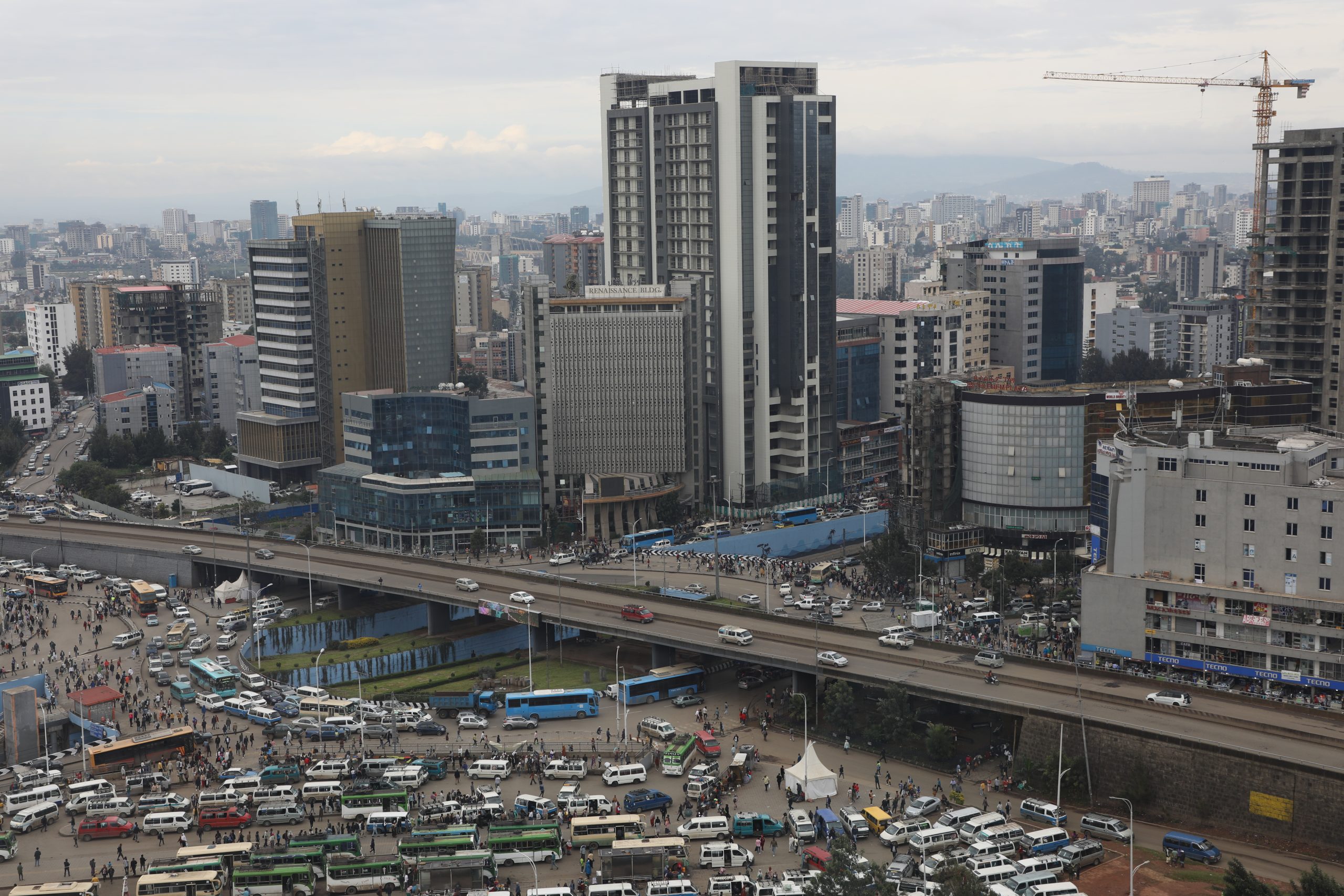
The physical and macroeconomic evolution of Ethiopia since the mid-2000s is undeniable. World Bank historical data show Gross National Income (GNI) per capita rising from a meager USD110 in the early 1960s through turbulent cycles of political disruption and economic reversal, before accelerating markedly in the 2000s. Between 2004 and 2018, real GDP expanded at an average annual rate of approximately 10.5 Percent, driving national output from USD18.7 billion in 2003 to nearly USD90 billion by 2019. Modern infrastructure scaled at a breathtaking pace—road networks stretched across the regions, power generation capacity multiplied, state-of-the-art industrial parks emerged, and Addis Ababa established itself as a bustling diplomatic and commercial capital.
Yet, for millions of urban households, the daily experience of this macroeconomic boom tells a sharply contrasting story.
Every weekday morning before sunrise, 39-year-old Dawit Nigussie leaves his apartment in Addis Ababa for work. Dawit is a banker. On paper, he embodies every credential traditionally associated with an emerging middle class: he holds a university degree, maintains a stable white-collar office job, owns a family car, sends his two children to private school, and manages a home mortgage that once appeared fully manageable. His nominal salary has increased from 17,000 to 40,000 ETB over the past five years, yet he still does not feel twice as prosperous.
His monthly grocery bill has nearly doubled, private school tuition absorbs an ever-larger fraction of his pay, routine healthcare demands meticulous financial planning, and emergency savings have evaporated. The traditional annual family holiday was excised from the household budget years ago.
“I earn more than ever,” Dawit observes, “but I can afford less.”
Dawit’s predicament captures the central contradiction at the heart of Ethiopia’s economic transformation. Headline growth recorded in national accounts is failing to translate into financial security at the dining table. The central developmental test is no longer simply whether Ethiopia’s economy is expanding, but whether that expansion is producing durable economic security for its citizens.
The Structural Disconnect: Middle-Income Population vs. Middle-Income Economy
Ethiopia long harbored explicit development ambitions to graduate into lower-middle-income status by 2025—a milestone requiring a GNI per capita between USD1,137 and USD4,458. However, macroeconomic forecasting correctly predicted that headline growth alone would fall short. Under the World Bank’s official income classification framework, economies with a GNI per capita at or below USD1,175 remain firmly categorized as low-income.
Addressing this gap requires confronting a fundamental analytical question: How should we understand the relationship between a country’s national income classification and the actual living standards of its households?
The World Bank categorizes economies into four groups based on GNI per capita thresholds: low-income (USD1,175 or less), lower-middle-income (USD1,176 to USD4,635), upper-middle-income (USD4,636 to USD14,375), and high-income (USD14,375 and above). Seasoned international economist Mussie Delelegn (PhD) argues that a primary limitation of this framework is its strict reliance on income alone. As Mussie explains, an income-only criterion masks the form, quality, sustainability, and distributional aspects of income, including inequality. It also overlooks structural differences between countries, the role of the informal economy, and undermines the nature of the drivers and enablers of income growth itself.
Mussie contrasts the World Bank’s singular focus with the United Nations’ composite evaluation metrics, which measure socioeconomic progress through the Human Assets Index (HAI)—evaluating human capital, health, and education—and the Economic Diversification Index (EDI), which assesses structural vulnerability to economic shocks.
Because of these structural flaws, Mussie cautions against treating administrative income thresholds as the ultimate benchmark of national progress. He emphasizes that Ethiopia’s inability to graduate from the low-income to the lower-middle-income category should be less of a concern because even if the country succeeds in doing so, it will remain locked in the lower-middle-income category for several years to come. Instead of being preoccupied by making minuscule progress that does not mean anything to ordinary people, Mussie (PhD) asserts that countries such as Ethiopia should critically examine structurally binding constraints to their development and determine how best to address those constraints. The overall vision should be to break away from the lower-middle-income trap entirely rather than attempting to step into it.
This perspective aligns directly with the analysis of prominent business executive and policy analyst Kebour Ghenna, who highlights a crucial distinction between having a middle-income population and building a genuine middle-income economy. Kebour stresses that the real question is not whether Ethiopia is growing, but whether growth is producing true economic security. While Ethiopia may have individual households whose incomes place them within middle-income ranges, whether the economy itself has reached the stage where a significant and stable middle-income population can be sustained depends on deeper structural indicators: productivity, employment, industrialization, exports, poverty reduction, and the movement of workers into higher-value economic activities.
Kebour notes that while individual households with middle-income consumption standards certainly exist in Ethiopia, the available statistical data fails to demonstrate the existence of a broad, stable segment of the population with sustained middle-income purchasing power. For Ethiopia to build a true middle-income economy, its economic machinery must undergo structural transformation.
Instead, Ethiopia’s rapid expansion exhibits the classic hallmarks of “jobless growth.” Manufacturing value-added remains marginal, representing just 6.8 percent of GDP in 2020/21 compared to 32.5 percent for agriculture. Public infrastructure investments and commercial construction booms have successfully inflated aggregate GDP, but they have failed to generate permanent, high-productivity formal employment capable of converting national output into real household wealth.
The Anatomy of Vulnerability: Deconstructing the “Middle-Class” Illusion
Can a nation officially classified as low-income possess a substantial middle-income population? Mussie offers a decisive answer, stating clearly that there is no way for such a country to maintain a substantial middle-income population. In principle, within the Ethiopian context, bankers, engineers, medical doctors, technologists, entrepreneurs, professors etc are supposed to be among the middle-income population. However, their proportion is very small compared to the massive population living in extreme or multidimensional poverty.
Globally, the middle-income population has expanded to an estimated four billion people over recent decades. However, as Mussie stresses, nearly 80 percent of these individuals reside in middle- and upper-middle-income economies, predominantly in Asia—notably China and India. Sub-Saharan Africa accounts for less than 10 percent of the developing world’s middle-income population. Given Ethiopia’s low per-capita baseline, its middle-income segment is statistically tiny. Mussie argues that the narrative frequently repeated about the growth of Africa’s middle-income population is not factual or substantiated by evidence and statistics, but is rather more political or a “feel-good attitude” than the reality on the ground.
To the extent that international agencies measure this population, methodology matters. The World Bank relies on periodic surveys—such as the Living Standards Measurement Study (LSMS)—conducted alongside national bodies like the Ethiopian Statistics Service. Yet Mussie points out that these surveys suffer from severe structural biases. Most of the time, they do not cover informal or care economy sectors, or they are limited to urban areas while ignoring rural areas where significant populations reside. Furthermore, surveys in Sub-Saharan Africa are not free from subjectivity and government influence, compounding what economists recognize as regional “statistical tragedies”—data inadequacies that create major discrepancies when covering larger population segments.
When examining the available empirical framework, the boundary separating poverty from the middle class in Ethiopia is less a solid foundation than a narrow, fragile tightrope. Data from the World Bank’s Poverty & Equity Briefs confirm that approximately 43 percent of Ethiopians live below the USD3.00-a-day international poverty line, while 63.7 percent fall below the lower-middle-income poverty threshold of USD4.20 a day. A staggering 93.5 percent live below the USD8.30-a-day upper-middle-income benchmark—meaning that only 6.5 percent of the population enjoys a consumption level indicative of genuine economic security.
Under the African Development Bank (AfDB) framework, households are categorized into a floating class (USD2–USD4/day), a lower-middle class (USD4–USD10/day), an upper-middle class (USD10–USD20/day), and a high-income group (above USD20/day). The AfDB metrics indicate that only 6 percent to 14 percent of Ethiopia’s population—roughly 8 to 18 million people—belongs to a relatively stable middle class, while an estimated 112 to 123 million people remain poor or highly vulnerable.
The “floating class” represents the vast majority of non-poor Ethiopians. These are households that have stepped just above the extreme poverty line but possess no financial buffer capacity. A single adverse event—a spike in food prices, currency devaluation, sudden illness, or job loss—instantly drops them back into extreme poverty.
Mussie emphasizes that failing to distinguish between “middle-income” households and a true “middle class” obscures this vulnerability. Both classifications are based on a single income variable, ignoring inflationary pressures, taxation, or the purchasing power of the local currency. Middle-class status, beyond income, measures the economic and social well-being of citizens, including job stability, consumption patterns, the propensity to save after meeting food and non-food needs, and investments in health and education.
In practice, Ethiopia’s middle-income professionals are locked in a continuous struggle for basic economic survival. The so-called middle-income household in Ethiopia sits just one step ahead of those on the extreme poverty line. Like poor households, the Ethiopian middle-income population spends a significant proportion of its income on food consumption alone. They cannot afford decent housing, vacations, transport, or tuition for better education for their children—a reality observed when health workers grieve about daily struggles and university professors cannot afford decent clothing and footwear.
Macroeconomic Shocks, Inflation, and Multidimensional Poverty
The fragility of Ethiopia’s middle-income segment has been sharply accentuated by recent economic and non-economic shocks. Over the 2015–2026 period, persistent climate disruptions, political instability, regional conflicts, and global shocks like COVID-19 eroded household balance sheets.
Crucially, conservative estimates show that the proportion of Ethiopians living in extreme poverty below the USD3.00-a-day line expanded from 33 percent in 2015/16 to 39 percent in 2021/22, reaching 43 percent by 2025/26. Mussie notes that this 10-percentage-point increase directly reflects former middle-income earners sliding backward, as households that could not stay within the middle-income category fell back into poverty traps due to exorbitant taxation, stubborn inflation, and the declining purchasing power of the birr.
The decision to free-float the Ethiopian birr in foreign exchange markets triggered persistent inflationary pressures that severely diminished real purchasing power. Afrobarometer and regional economic cost-of-living indices confirm that Ethiopia has emerged as one of the most expensive countries in Sub-Saharan Africa relative to median wages.
These domestic pressures are exacerbated by acute external sector imbalances. In 2024, Ethiopia recorded USD4.5 billion in merchandise export earnings against USD21.5 billion in imports—yielding a record trade deficit of USD17 billion. With Official Development Assistance (ODA) declining and foreign exchange reserves constrained, reliance on external borrowing risks deepening debt distress, reinforcing structural currency depreciation and fueling domestic inflation, which registered at 13.9 percent in mid-2026.
This macroeconomic deterioration is further compounded by non-economic shocks. According to the UNDP and Oxford Poverty and Human Development Initiative (OPHI) Global Multidimensional Poverty Index 2024, multidimensional poverty in Ethiopia rose from 68 percent in 2019 to 72 percent in 2024—affecting approximately 86 million citizens. Nearly 45 percent of those in acute multidimensional poverty reside in areas plagued by conflict and instability, with children comprising half of those deprived. Conflict destroys physical assets, interrupts schooling, disrupts local supply chains, and dissolves the thin financial buffers that keep floating-class households afloat.
International comparison further highlights Ethiopia’s institutional exposure. While middle-class households in advanced developing nations benefit from state safety nets, subsidization, and formal unemployment protections, Ethiopia’s middle-income professionals navigate economic shocks largely unprotected. Without institutional buffers, any macroeconomic tremor threatens to plunge skilled workers directly into poverty.
Reclaiming the Future: Structural Reforms to Bridge the Gap
Missing the 2025 lower-middle-income deadline is not merely a missed calendar target—it is an emphatic signal that extending past capital-intensive, state-led growth models will not yield sustainable prosperity. Kebour warns that crossing a nominal GNI threshold without structural reform will leave Ethiopia stuck in an economy defined by low productivity, weak industrial output, and persistent household insecurity.
Mussie similarly argues that the primary objective of national economic policy must be breaking out of the low-level equilibrium trap. While economists frequently concentrate on the majority living below the poverty line, the tiny size and extreme vulnerability of the middle class indicate that the broader economy remains locked in a low-level equilibrium characterized by low productive capacity, limited structural transformation, and generalized underdevelopment.
To escape this trap and construct a genuine, self-sustaining middle class, Ethiopia must implement comprehensive structural reforms aimed at augmenting productive capacities across four key policy pillars.
First, the country must execute agrarian transformation and rural modernization. Agriculture continues to engage nearly 80 percent of the population and generate over 90 percent of merchandise export value, yet it remains overwhelmingly rain-fed and reliant on rudimentary farming techniques. Policy must prioritize reforming land ownership frameworks, expanding rural infrastructure, and improving smallholder access to modern farm inputs, irrigation, fertilizers, and extension services. Ethiopia must adopt policies that incentivize agricultural production rather than merely subsidizing urban consumption, forging tight forward and backward linkages between rural producers and urban industrial processors.
Similarly, economic policy must drive labor-intensive industrialization and export diversification. Ethiopia must address its persistent manufacturing deficit by developing sustainable domestic supply chains integrated into regional and global markets. Because manufacturing accounts for less than 7 percent of GDP, structural policy must deliberately prioritize labor-intensive manufacturing. Expanding value-added light manufacturing, textiles, leather, and agro-processing will absorb surplus rural labor into formal, high-productivity jobs capable of generating steady real-wage growth.
Furthermore, state and private institutions must augment systemic productive capacities. Building productive capacity requires major public and private investments in foundational infrastructure—including reliable electricity, digital ICT connectivity, and transport logistics. Policies must actively build human capital through targeted vocational skills training, support entrepreneurship, expand access to finance for Small and Medium-Sized Enterprises (SMEs), ease exorbitant tax burdens on wage earners, and cultivate a competitive, dynamic environment for private enterprise.
Fourth, national leadership must prioritize restoring peace, political stability, and policy predictability. Productive capacities cannot take root in an environment characterized by recurrent conflict and policy volatility. Restoring institutional peace, political stability, and macroeconomic predictability across fiscal, monetary, and exchange-rate frameworks is an indispensable prerequisite for long-term investment, business confidence, and household wealth accumulation.
Ethiopia’s long-term economic path stands at a critical juncture. For two decades, headline GDP expansion offered a compelling narrative of national modernization. Yet, as the everyday experience of millions of urban workers demonstrates, aggregate economic growth does not automatically guarantee household financial security.
Without high-productivity formal jobs, robust social safety nets, stable purchasing power, and durable peace, the boundary separating Ethiopia’s emerging middle class from poverty remains dangerously thin. Moving forward, the true metric of Ethiopia’s development success will not be whether it can incrementally cross an administrative income threshold, but whether it can fundamentally restructure its economy to ensure that ordinary citizens—like Dawit—can build savings, accumulate wealth, and secure a lasting foothold in the nation’s future.