

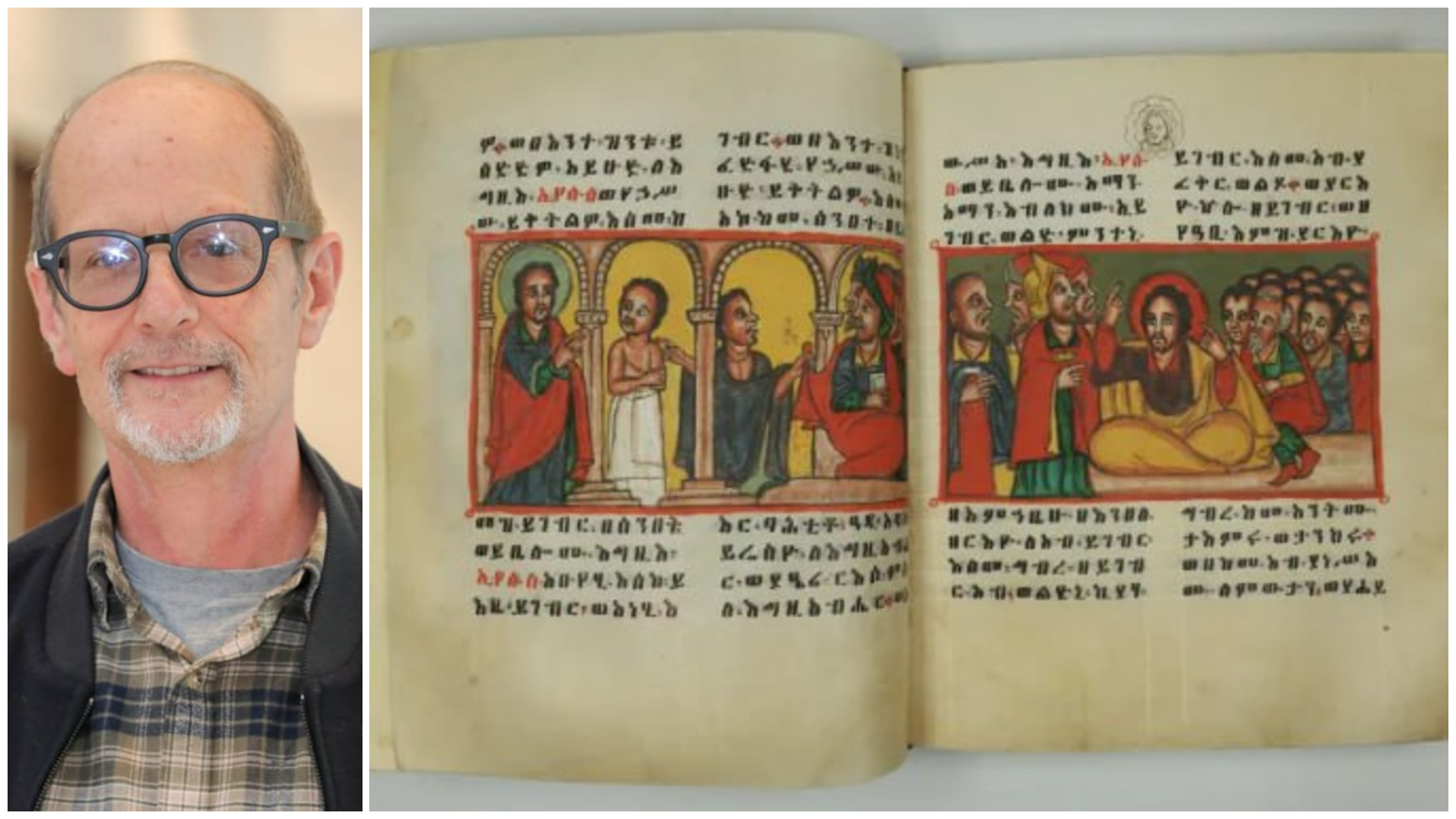

For more than a century and a half, Ethiopian manuscripts have travelled far from the churches, monasteries, and royal collections where they were created and preserved. Most crossed borders through looting and entered private collections, museums, and the international antiquarian market through chains of ownership that are now difficult to reconstruct. For Ethiopia’s scattered manuscript heritage, the journey home is gaining momentum—but remains far from complete.
In September, seventeen ancient parchment manuscripts returned to Ethiopia from the United States, marking one of the latest successes in a growing effort to recover cultural heritage removed from the country. Dating from the 17th to 19th centuries, the manuscripts include the Ta’amra Maryam (Miracles of Mary), the Four Gospels, the Synaxarium, and the Psalms of David. They were distributed among seven Ethiopian institutions for preservation, research, and religious stewardship. But even as some manuscripts return, others remain at the centre of unresolved ownership disputes.
One of the most prominent cases is the Gondarine Gospel, an illuminated Ge’ez manuscript believed to have once belonged to Emperor Tewodros II. The manuscript resurfaced on the international antiquarian market when Inlibris, a Vienna-based bookseller, listed it for about €250,000 in connection with the Abu Dhabi International Book Fair.
RELATED POSTS


The listing triggered objections from Ethiopian authorities and heritage campaigners, led in part by Alula Pankhurst (PhD), who stated that the manuscript was among the items looted from Maqdala by British forces during the 1868 expedition. Alula and others, together with the Ethiopian Heritage Authority, wrote to urge that it not be sold.
The manuscript was subsequently withdrawn from the sale. But withdrawal is not repatriation.
Inlibris has argued that it acquired the Gospel through legitimate previous transactions and therefore has the right to sell it, describing the campaign for its return as a “smear campaign.” Alula rejected that characterization, while acknowledging that the company should be credited for temporarily removing the manuscript from its sale list. He noted, however, that the manuscript remained on the company’s website.
Pankhurst’s concern goes beyond the immediate sale. He argues that Ethiopia has both a legal and moral claim to the manuscript, though he also recognizes the practical difficulties of securing its return. Even if the current owner agreed to give it back, they could demand a substantial payment—potentially beyond Ethiopia’s means.
His recommendation is therefore pragmatic: the Ethiopian government, diaspora communities, and others concerned with the country’s heritage should pursue negotiations with the current owner, potentially seeking its return at a reasonable price.
The Victoria and Albert Museum alone holds around 90 Ethiopian objects, many associated with the British expedition to Maqdala, including manuscripts, a gold crown, and a gold chalice.
Recent research has also shown that the provenance of objects can remain hidden in institutional catalogues for generations. In 2026, V&A researchers identified an Ethiopian manuscript previously catalogued simply as a “service book” as a Ge’ez Psalter written by Aleka Zeneb—a secretary, friend, and royal chronicler of Tewodros. Museum records had linked it to a church at Maqdala.
The discovery highlights a central problem in restitution: identifying an object is only the first step. Establishing how, when, and under what circumstances it left Ethiopia can be equally difficult.
Despite these challenges, Ethiopia has secured a series of returns in recent years. The Ethiopian Heritage Authority reports that more than 67 cultural objects were recovered over the seven years preceding the latest return of the 17 manuscripts. The returns have come through different channels, including diplomatic negotiations, institutional decisions, provenance research, and voluntary restitution.
Yet many significant Ethiopian collections remain abroad. For objects taken in 1868, the legal path is particularly complicated. The 1970 UNESCO Convention established an international framework against illicit trafficking and for the restitution of cultural property, but it is generally not retroactive. As a result, many historical restitution cases depend on negotiation rather than a straightforward legal process.
That makes the Gondarine Gospel emblematic of the wider challenge. The bookseller has maintained that the proposed sale was legal under the 1970 UNESCO Convention. Alula disputes that position, arguing that circumstances have changed and that the manuscript should ultimately return to Ethiopia.
While its withdrawal from sale halted an immediate commercial transaction, it has neither resolved the question of ownership nor guaranteed its return.
For Ethiopia, these manuscripts are more than valuable antiquarian objects. They are primary sources of the country’s history, religious traditions, language, art, and intellectual heritage.
The return of seventeen manuscripts demonstrates that objects dispersed for generations can come home. The Gondarine Gospel demonstrates how difficult that journey can remain. For Ethiopia’s looted manuscripts, the journey home has begun—but it is far from finished.