


Writer and director Sami Bayush says his feature film “Gemehalia” cost roughly 1.7 million birr to make, but brought in only around 1.5 million birr during its Ethiopian theatrical run. From there, the film moved onto Habesha View, a digital streaming platform, and was later sold to a YouTube channel. It also traveled outside Ethiopia, reaching audiences through screenings in Canada, the United States, South Africa, and Europe. Money arrived from different places, at different stages of the film’s life.
“In the film business, we have to collect money from many small sources,” Sami told The Reporter Magazine.
Behind that observation is a larger shift in Ethiopian cinema. Increasingly, making the film is only one part of the business; recovering what went into it can mean carrying the same work across cinemas, digital platforms, broadcasters and audiences abroad.
RELATED POSTS


The search for alternatives is not entirely new. UNESCO’s 2021 report, The African Film Industry: Trends, Challenges and Opportunities for Growth, documented the growing role of digital platforms in reshaping film distribution across the continent. In Ethiopia, a separate 2020 UNESCO policy record shows that the Ethiopian Film Producers Association had already pursued alternative distribution through a partnership with Canal+, allowing Ethiopian films to be streamed for limited periods while filmmakers retained ownership. The record reported that participating filmmakers saw their income increase by as much as three times compared with existing distribution through cinemas and local television, while the association was also developing an online streaming service targeting the Ethiopian diaspora.
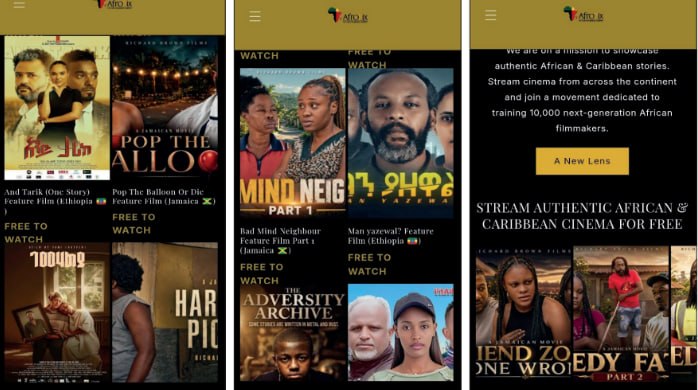
Nur Akmel, an Ethiopian writer, director and producer whose film “Man Yazewal” is among the titles on AfroPix, says the business has already changed dramatically. “It has changed completely. It used to be that 100 percent of revenue came from cinemas,” he says. Nur recalls between 28 and 33 cinemas operating in the past, compared with what he estimates to be only seven to nine active venues today.
Since COVID-19, he says, filmmakers have increasingly turned to digital platforms, selling portions of distribution rights to applications and broadcasters to recover costs. He points to TeleTV and a growing field that includes Art Plus, Lucy TV, MayaFlicks, Alem Cinema’s own platform and others.
Yet moving audiences online does not automatically solve the revenue problem. Nur says the difficulty is not convincing Ethiopians to watch films, but getting them to pay for what they watch. “The main issue in Ethiopia isn’t that people don’t watch films; it’s that they have a problem with paying for them, even if it’s just 1 or 10 Birr,” he says.
But more outlets bring another calculation: what filmmakers surrender in exchange for access. Nur points to a film he sold years ago to a YouTube channel, which he is now trying to have removed. “The biggest problem with selling to YouTube is that you often lose 100 percent of your rights,” he says. “You give your work away for a small amount and lose it forever. We need better deals that protect the filmmaker.”
That is one reason the AfroPix arrangement caught attention. Yirgashewa Teshome, founding director of the Ethiopian International Film Festival (EIFF), says AfroPix approached him to facilitate bringing Ethiopian films onto the platform. Alongside its payment model, he says, a key feature is that the agreements are non-exclusive.
“In the past, many producers were trapped by two-year or other long-term exclusive contractscontracts that prevented them from showing their films at festivals or other venues,” Yirgashewa told The Reporter Magazine. “With Afropix, they can still sell to TV, show in cinemas, or enter festivals while earning from the platform.”
AfroPix founder Tyrone Satchwell says the policy is deliberate. Because the platform does not pay filmmakers upfront, it allows them to continue monetizing the same work elsewhere.“It’s our general policy to not ask filmmakers for exclusives so they can distribute their content in as many different places as possible,” Tyrone says.
For Nur, whose film “ManYazewal” is already available elsewhere, that flexibility matters. He says he would not have joined if the agreement prevented him from continuing to show his film through other outlets.
AfroPix itself is new to the market. The London-based company was established in 2025 and focuses on African and Caribbean cinema. Its Ethiopian Showcase, launched with EIFF on July 30, currently includes Man Yazewal, Yemeskel Wofe and the documentary The Adversity Archive. More films are expected to follow, including Sami’s Gemehalia.
For Yirgashewa, the appeal is also about where those films might travel. “It places Ethiopian films in a global network where someone in Argentina or Bulgaria, or even university researchers, can discover our work,” he says.
At the center of AfroPix’s proposition is its payment rate: USD 3,000 for 100,000 views, a rate both Yirgashewa and Tyrone describe as roughly ten times what Ethiopian filmmakers might earn from a comparable number of YouTube views, though YouTube payouts vary. But Tyrone says 100,000 is not a threshold filmmakers must cross before earning anything. Payment accrues with views, meaning 10,000 qualifying views would earn USD 300. A view, he says, counts once someone watches for more than five minutes.
Tyrone says AfroPix intends to finance the model through advertising and subscriptions. Content can be watched free with advertising, while viewers can pay USD 5.75 a month to remove ads. The company expects advertising revenue from higher-paying markets such as the UK and US and projects that, globally, around one percent of viewers could become paying subscribers.
The model is still unproven, however. Tyrone says no filmmaker has yet been paid under it. AfroPix only recently moved beyond what he describes as a soft launch, during which its technology was being tested, to its full launch with the Ethiopian partnership.
Nur is measured about the offer. “While USD 3,000 isn’t necessarily ‘enough’ or ‘extraordinary,’ it’s a very good starting point,” he says. “If the audience grows, we can discuss the numbers further.”
Money is not Nur’s only attraction. “One of the best things is the quality; it allows us to upload original files at their full resolution,” he says. He also sees AfroPix as a route to African filmmakers and international film festivals.
Sami, meanwhile, has already seen how a large online audience can fail to produce a corresponding return. “My film called ‘Bale Kerar,’ has over 6 million views on YouTube, but 5 million of those views were from within Ethiopia,” he says. “Because of how YouTube pays, those 5 million views gave me zero Birr. You get almost nothing for views within the country.”
Tyrone says building those audiences will be a shared effort. Filmmakers will partly promote their own work, while AfroPix plans to expand its reach through Roku and Amazon Fire TV, popular streaming-TV platforms that allow viewers to access apps and online video content on television sets. The strategy, he says, is intended to make AfroPix more discoverable in markets including the US, UK and France, while the platform also targets viewers across Africa.
With payments tied directly to views, filmmakers also need to know how those views are counted. Tyrone says qualifying views are recorded by a dashboard provided by AfroPix’s video-software supplier, which he says the company cannot alter. The figures are reviewed every three months and shared with Yirgashewa and the filmmakers. Filmmakers do not currently have direct access to the dashboard, though Tyrone says AfroPix is working to provide it.
For Tyrone, the longer-term test is whether that model can translate into sustainable income for the people making the films. “If filmmakers monetize their content and they make enough to make another movie, or are able to make a living from their content on AfroPix, I would consider that a success,” he told The Reporter Magazine.
That leaves digital distribution as an expanding opportunity, but not a guarantee. For Sami, the logic is already familiar. Gemehalia did not make its return in one place. It moved from cinemas to digital distribution, a YouTube sale and audiences abroad, gathering revenue along the way. Now, as it prepares to move onto another screen, its journey reflects the changing economics of Ethiopian filmmaking itself: the film may be finished, but the business of finding an audience, and finding a return, can continue long after the credits roll.