
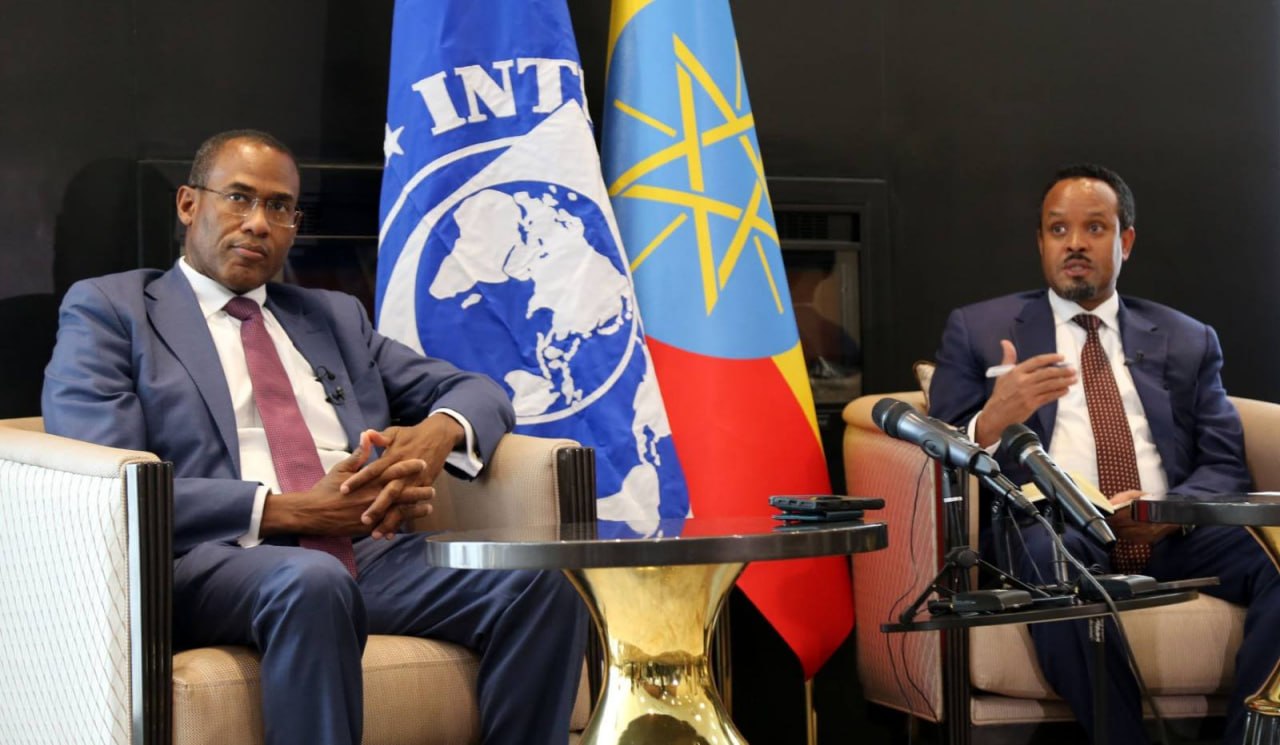

The International Monetary Fund has recommended more contractionary monetary policy for Ethiopia while calling for improvements in fiscal transparency and public financial management, according to its 2026 G20 Report on Strong, Sustainable, Balanced, and Inclusive Growth.
In its monetary policy assessment, the IMF says more contractionary monetary policy is recommended for Ethiopia, alongside Algeria, Egypt and Ghana. The Fund says Algeria is the only one among the African Union economies covered in the assessment expected to have an expansionary monetary policy stance.
Beyond the recommended monetary policy stance, the IMF’s structural reform assessment identifies monetary and financial sector reforms as a high priority for Ethiopia.
RELATED POSTS

The Fund says priority reforms in the monetary and financial sectors among the African Union economies assessed focus on strengthening monetary policy frameworks and transmission, specifically citing Ethiopia alongside Algeria, Angola, Egypt and Nigeria.
Fiscal policy reform is also rated a high priority for Ethiopia. The IMF says fiscal reforms are considered a high priority in all but one of the African Union economies assessed, with Morocco the exception. Across the group, strengthening tax policy and revenue administration is highlighted as a key priority.
On governance, the Fund says reforms in Ethiopia should focus on improving fiscal transparency and public financial management. Ethiopia is cited alongside Angola, Kenya and Nigeria in this recommendation. Governance reform is rated a medium priority for Ethiopia in the structural reform assessment.
The assessment also places external sector reform among Ethiopia’s high-priority areas, alongside fiscal policy and monetary and financial sector reforms. Business regulation is rated a medium priority for Ethiopia.
The IMF assigns a low priority to education and skills, green reforms, and innovation and digitalization, while labor market institutions are classified as “not a priority” under the structural reform assessment.
The Fund says adopting the recommended governance, fiscal, monetary and financial sector reforms among the African Union economies assessed could support growth by mobilizing domestic revenue and strengthening macroeconomic institutions.