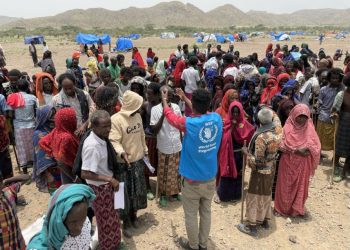


Drought-related anticipatory action has been triggered in 114 Ethiopian woredas with an estimated population of 9.3 million people, as the country faces below-average rainfall during the 2026 Kiremt season and a heightened risk of flooding later in the year, according to an August 2026 urgent call for assistance by the Food and Agriculture Organization of the United Nations.
FAO says more than 163 woredas have been identified as vulnerable, while the Ethiopian Disaster Risk Management Commission has triggered anticipatory action in 114 of them. Of these, 84 woredas in Afar, Amhara, northern Somali and Tigray have been classified as Priority 1 and Priority 2 areas, depending on the severity of conditions and the need for assistance.
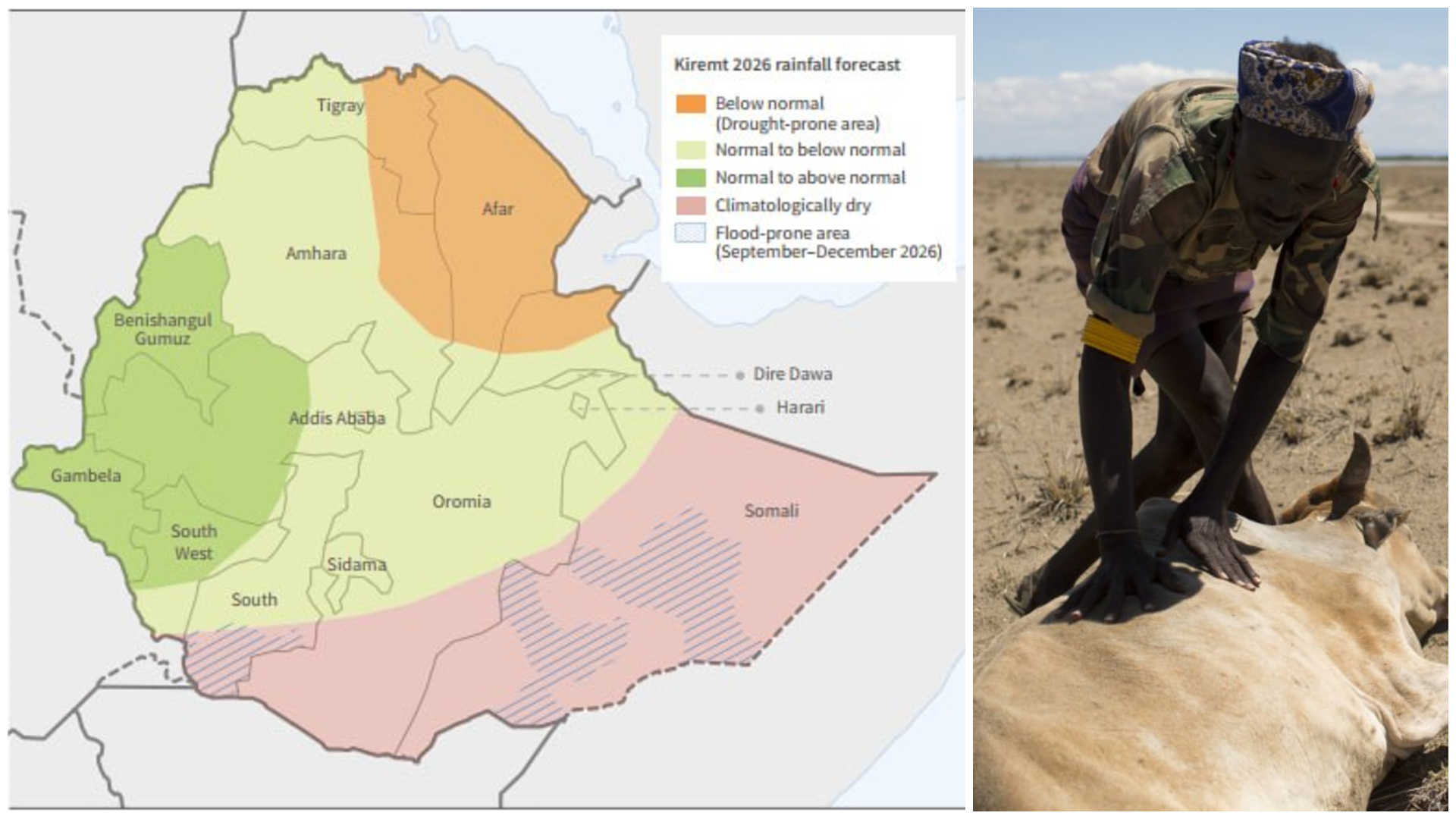
The organization is seeking USD 50 million to assist 4.66 million people between June 2026 and March 2027. The targeted areas include drought-prone locations in Afar, Amhara, northern Somali and Tigray, as well as flood-prone areas in southern Somali, South Ethiopia and South West Ethiopia.
RELATED POSTS

FAO warns that the anticipated El Niño event could affect Ethiopia in two stages. Drought is expected during the June to September Kiremt season, while the risk of flooding is expected to increase between October and December. Historically, El Niño has suppressed Kiremt rainfall in central, northern, northeastern and eastern Ethiopia while increasing the likelihood of heavy rainfall and flooding in southern and southeastern lowland areas later in the year.
The potential impact on agriculture is significant because Kiremt rains account for more than 70 percent of Ethiopia’s national crop production and support the livelihoods of millions of rural households.
FAO says forecast below-average rainfall and above-average temperatures are expected to accelerate soil-moisture loss, reduce crop establishment and yield potential, limit water and pasture availability, and increase stress on livestock production. Anticipated flooding could also damage agricultural land, infrastructure and productive assets, further disrupting livelihoods and reducing crop and livestock production.
FAO also says early investment in agricultural and livestock support has generated up to USD 3.60 in benefits for every USD 1 invested.
Of the 4.66 million people FAO plans to reach, around 2.03 million are targeted through anticipatory action, while 2.63 million are expected to receive early-response assistance.
Under the anticipatory action phase, FAO plans to provide animal-health services, including vaccination and treatment, to 406,250 households and distribute 4,984 tonnes of supplementary livestock feed to 24,921 households. Another 31,700 households are expected to receive drought-tolerant, flood-tolerant and early-maturing seed varieties together with fertilizer.
The plan also includes USD 100 cash transfers to 56,000 households to help meet immediate needs. Another 3,125 households are expected to participate in cash-for-work programmes aimed at rehabilitating water sources, irrigation schemes and flood-protection structures.
Once the anticipatory action period ends, FAO plans an early-response phase that includes animal-health services for 526,000 households, targeted cash assistance for 70,300 households, and cash-for-work support for another 23,270 households.
FAO also plans to provide 44,600 households with 6,472.6 tonnes of agricultural inputs, which it says are intended to restore production and support household food requirements for between eight and 11 months.
The organization says 82 percent of rural Ethiopian households depend on agriculture for their livelihoods, while 40 percent of children under five are stunted and five percent are wasted, citing Ethiopia’s 2024–2025 Demographic and Health Survey.
FAO warns that without timely anticipatory and early-response measures, vulnerable pastoral and agropastoral households could face worsening food insecurity and increased humanitarian needs.