

- No Individual Tribute for Simegnew Bekele
With the inauguration of its landmark dam on the Nile, Ethiopia is on the verge of realizing a centuries-old national ambition. The project has come at a great cost, marked by both sweat and bloodshed. Yet, the journey doesn’t seem over. The government has already hinted at future projects on the Nile.
In the meantime, some of the government’s approaches are facing criticism from within the country and warnings from abroad.
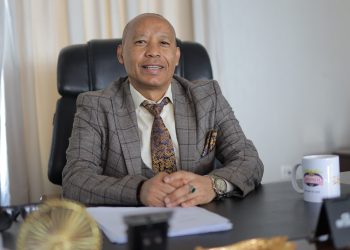
Bewket Abebe of The Reporter Magazine caught up with Minister of Water and Energy, Engineer Habtamu Itefa (PhD), to discuss these and other topics. EXCERPTS:
RELATED POSTS
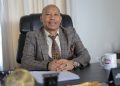

The Reporter Magazine: The GERD has long been a national dream and has become a source of unity for Ethiopians, transcending even the most contradictory political stances. As this centuries-old dream is about to be realized with the inauguration, what does it feel like to be the Minister of Water and Energy at this particular point in history, and could you share a few details about the final preparations?
Minister Habtamu Itefa (PhD): Yes, it has been a dream for Ethiopians for centuries. Our forefathers have been dreaming about utilizing our water resources. When it comes to the Blue Nile, the previous kings and leaders had the idea to utilize the waters. But due to reasons—specifically conspiracies against our people and our nation—they couldn’t make it happen.
The current generation, including you and I, is more blessed than any other generation to see such a mega project being realized by Ethiopians. And as part of the leadership handling it, I feel lucky. Achieving the GERD means the start of Ethiopia’s greatest journey.
Regarding preparations, we are prepared to accommodate everyone who wishes to join us in celebrating our biggest project. There are two aspects to it: one is acknowledging all Ethiopians who have made it happen, but that is not all. It is not a project for Ethiopians only; it is for our neighbors as well. It is actually a dam for all Africans. Our biggest project is for the Sudanese, Kenyans, Djiboutians, the Tanzanians, and for sure, it’ll go to South Africa and the entire continent. And especially for those under the NBI. They deserve to feel proud of what their Ethiopian brothers have done with their own resources within their own territory.
This is how we are preparing: to accommodate everyone. This critical milestone tells our brothers that there is something big coming. We are saying, ‘Join us and celebrate!’ Our Prime Minister has already invited everyone to come celebrate with us.

Have there been any other forms of official invitation to countries and organizations beyond the PM’s call at the parliament?
When the Prime Minister was announcing the invitation, their ambassadors were present. In fact, they are confirming their attendance, which is what we expect.
There has not been any other form of formal invitation from the government for leaders to attend the celebration?
There should be. There are, from the government’s side.
How many countries have you sent official invitations to, and how many have so far confirmed their attendance?
Won’t tell you (he just nodded in refusal to answer this question)
Could you comment on the rumors that a number of leaders have declined to attend?
Who said that? It is simply an allegation from those who don’t want us to have the dam. Let me get you one proof. Last year, we had a Nile celebration here in Ethiopia. We invited the ministers of NBI. The Egyptian minister lobbied for them not to come here. Their response was, ‘How come someone tells me not to go to GERD?’ We took them to the site. But before that, they (the Egyptians) were propagating things like what you are saying now.
Have there been any recent diplomatic engagements with Sudan and Egypt, particularly since the Prime Minister’s announcement regarding the dam’s inauguration?
One of our umbrellas for engagement is the NBI, and we’ve had a series of meetings with all members. The Egyptians were among them. For us, the GERD is already done; we don’t have anything to discuss. The Nile is for everyone. We believe we are people from one river and one family. We should have one vision. Our people have equal rights to utilize their water resources.
The other thing I would like to share is that we do have a continuous engagement with Sudan. There is the Ethio-Sudan advisory committee. The committee has continued meetings every three months. We share ideas; information is exchanged.
With the Egyptians, we used to have a negotiation which they withdrew from for a year. But if they are ready now, Ethiopia is ready for discussion. The question is, what do you discuss? When you negotiate, you are assuming something will happen. But the GERD’s construction is complete. What do you negotiate about? I don’t see anything Ethiopia can compromise.
We said the dam is for everyone. They said it would hurt them. We have delivered on our promise. We are maximizing the minimum flow by four times. We are significantly reducing the floods they have historically faced [during rainy season]. It is not only the magnitude of the flood but also the timing. Because of GERD, the flood is delayed by one month, which means it happens after the flood that comes from White Nile passed. That makes them much safer.
So, I think Sudan and Egypt, more than any other African country, should be the ones celebrating the inauguration of the GERD. I hope that next time they come, they’ll come with a letter of thanks.

Egyptian officials, including President Sisi and Minister Hani Sewilam(PhD), have continued to express strong concerns about the GERD, describing Ethiopia’s actions as ‘unilateral’ and an ‘existential threat’ to their water security. Your counterpart, Minister Sewilam, was recently quoted as stating the GERD remains ‘illegal and incomplete.’ How do you respond to these specific criticisms and accusations?
You know, everyone, as a human being, has the right to talk. We also respect that. That doesn’t mean what they say is legitimate.
Ethiopia has built the dam not unilaterally but based on a trilateral agreement. We have been doing that. It was the Declaration of Principle that we signed in 2015 that allowed us to build the dam—and not only to build it, but also to fill it. We have also been sharing the necessary information about the dam with our neighbors. The Egyptians were invited to come, but they did not want to come and get the right information.
What we have been doing is based on the trilateral agreement that was signed by our previous prime minister Hailemariam Desalegn and the two presidents of the two countries.
Egyptian officials insist that Ethiopia’s pledges of ‘no harm’ to downstream nations must be codified into a binding agreement. What is your response to this demand, and is there any consideration of such a pact from Ethiopia’s perspective?
I wish you had asked me the question the other way. You know, we have the right to ask them about the dams they build because the water originates here. It’s now time for us to closely monitor developments in Egypt. I recently sent a letter to the Egyptian Minister of Water Resources and Irrigation stating that we (Ethiopia and the other upstream countries) were not made aware of the new city they plan to build that would rely on the Nile. They’ve planned a new city and intend to divert the Nile’s water to it. They should’ve consulted us. The Blue Nile belongs to all of us.
What was the response you received from Egypt to your demand for such an explanation?
There wasn’t any.
It has been implied that Ethiopia is planning to take its next steps for working on other projects on the Nile. That was even more specified in a statement one of your advisors made recently. Have any steps been taken so far, will there be any in the near future, or is that just an aspiration?
Today, we are getting ready to enjoy the inauguration of the GERD, Africa’s biggest dam. That is what I can say.
What we guarantee is that Ethiopian development will not hurt the Egyptians. This isn’t just a theory; I am telling you this from the practice we have from the GERD. It will also be a benefit for them. But one thing is clear now: the Nile belongs to all of us, and there will no longer be any Hydro-hegemony. We have equal stakes.
You have previously mentioned the possibility of building a new city centered around the GERD. Could you provide an update on this plan? Are there any concrete steps that have been taken to move it forward?
What we do needs to be well planned with an appropriate master plan. It should be at the appropriate location for fishing, recreation, buffer zone, etc. That is being undertaken.
The expected timeframe for the formation of the Nile River Basin Commission has passed. Could you please provide an update on its current status?
It’s in progress. By the way, it’s already available in legal terms [after the CFA], but we need to make it functional. We have a team working on it.
The formation may take years. Everyone should be incorporated into that commission; no one should be left behind. That is what we, the six of us, believe. We gave them nine months after the last council of ministers meeting here in Addis Ababa. We are still giving them time, until the next meeting of the council of ministers. If that can be done as soon as possible, everyone will be happy. If it takes more time, we lose nothing. Ethiopia will lose nothing.

It is widely believed that the delay has provided a window of opportunity for Egypt to influence nations that have signed the Nile River Basin Cooperative Framework Agreement (CFA) to reconsider their position. What is your view on this?
I don’t believe that. The CFA has modified the colonial agreement. That is the reality. I am sure these nations who signed the CFA do not want to get back to the colonial agreement. That is one point.
Another point is that the Egyptians had already left the NBI before the CFA. Now, we are bringing them back. We strongly believe it is better for them to be part of the NBI instead of moving alone and spreading false information against it.
Take for instance, the Mekong River Basin in China. It is the downstream countries that are pushing for the commission because they know the upstream countries have more potential and bargaining power. In our case, it is the reverse.
So, if the commission is realized as soon as possible, they are the ones who will benefit the most. If it’s delayed, Ethiopia loses nothing.
The way we have built the GERD has proved that any conspiracy to prevent Ethiopia from doing what it should do only makes us stronger and more united.
The GERD is a symbol of unity. I would say it’s our second Adwa, in which every Ethiopian dedicated their resources and their lives. When we celebrate the GERD’s inauguration, we need to remember those who sacrificed their lives for us.
Indeed, the GERD has been a truly national effort, with countless Ethiopians from all walks of life contributing to its success and leaving their mark. Within this effort, former chief project manager of GERD Engineer Simegnew Bekele is widely remembered for his immense dedication and ultimate sacrifice. Are there any specific tributes planned to honor his legacy and the well-being of his family (he left behind three minor children)?
We believe the GERD is the legacy of everyone. Why don’t we talk about those security forces who sacrificed their lives? Why don’t we talk about the drivers who got killed? Are they not Ethiopians? There are a lot of Ethiopians who paid a price. Why don’t we talk about Emperor Haile Selassie who brought the plan to the table at that time? Why don’t we talk about Mengistu Hailemariam who tried to build the big Tana Beles project in Pawi, Metekel? Why don’t we talk about His Excellency Hailemariam Desalegn who has been engaged in it? Why don’t we talk about Prime Minister Meles Zenawi who put the cornerstone for this project? Why don’t we talk about Prime Minister Abiy Ahmed who has changed the game of the dam? Why don’t we talk about the kid in Bugna who gave a chicken? Why don’t we talk about the woman in Shashemene who sells charcoal but still buys a bond every time? GERD is for everyone.

So, there is no such thing as an individual tribute for Engineer Simegnew Bekele, whom many Ethiopians see as the face of the GERD and sympathize with for his tragic death at Mesqel Square?
Why do you need to point to one individual when there are many in a similar situation? Is Mr. X or Mr. Y the most important of all of them? Completing the dam is the reward for everyone.
Is it true that as many as 15,000 people died in connection with building the dam (associated with the overall project) over the past 14 years?
Yes, that is true. That is why I say the GERD is the legacy of many.
Note: The final question has been edited for clarity. The original phrasing, “while building the dam,” has been changed to “in connection with building the dam (associated with the overall project)” to better reflect its intended meaning.
It has come to our attention that some media outlets and individual misinterpreted the original statement by taking it out of context; attributing the quoted 15,000 deaths specifically to on-site construction safety issues.
The Reporter Magazine would like to note that this was not the intended meaning of the question. We believe the Minister’s previous replies had already provided the broader context for the deaths, and the updated phrasing more accurately reflects the full scope of the question.