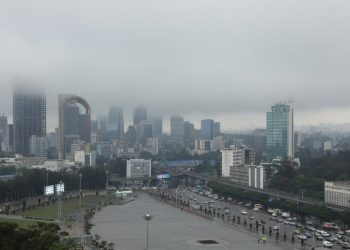

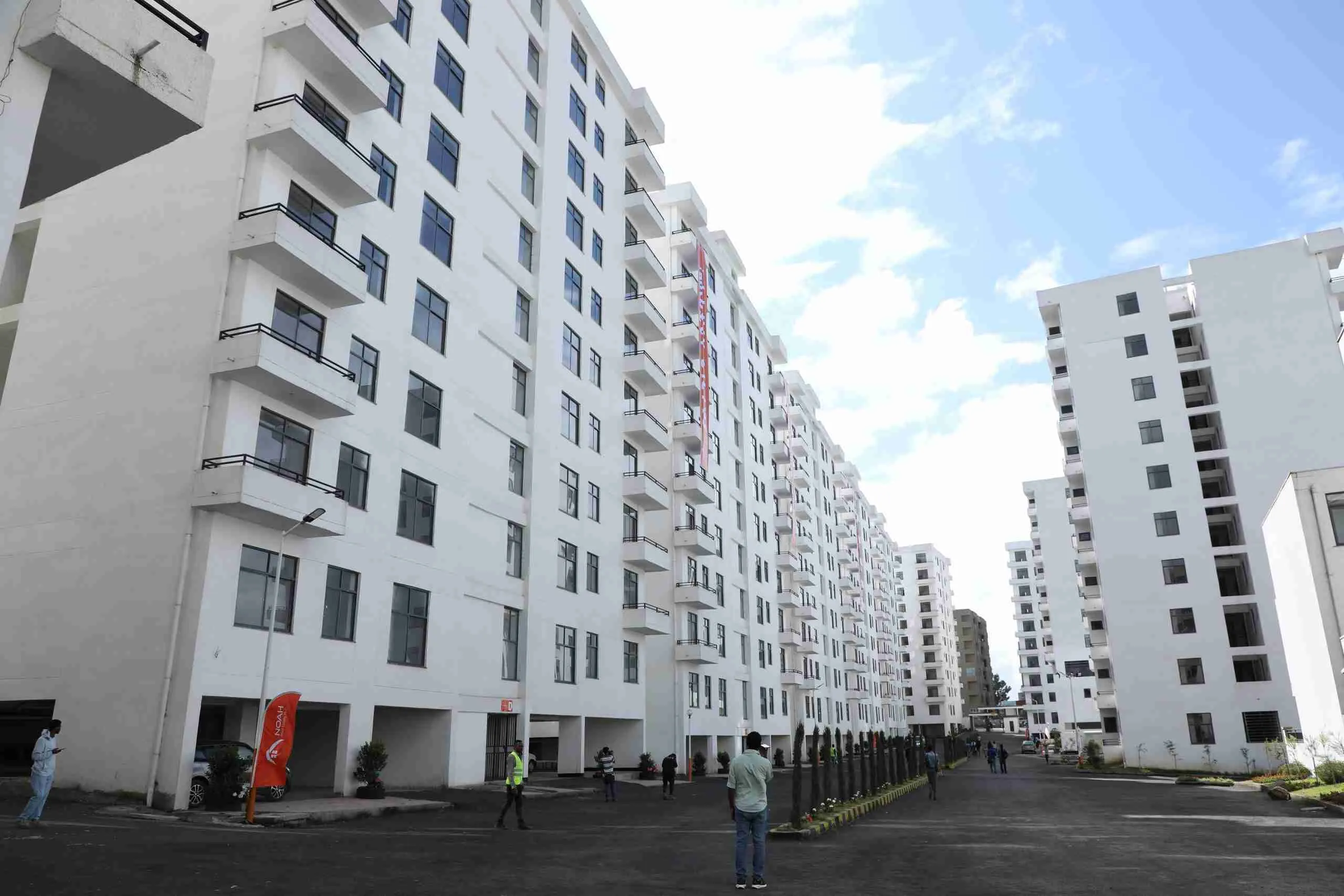

Anyone who frequents Addis Ababa’s bustling Bole Medhanialem neighborhood is likely familiar with the young men and women who prowl its streets, plying passersby with business cards and forms for ownership of a small piece of the city’s ballooning property market.
These young men and women are agents representing any one of the countless real estate developers in Addis Ababa, and they are only one of the avenues for attracting buyers to an increasingly saturated market. Developers buy out primetime TV ads, plaster their projects on billboards, and campaign on social media to reel in potential clients.
Of late, the competition for buyers’ eyes, and their money, has grown fiercer than ever before. Industry insiders say this is a reflection of dampened buyer enthusiasm, with demand leveling off following years of unbridled expansion.
RELATED POSTS


“The real estate sector in Ethiopia is experiencing market shocks. While the potential demand for housing in Ethiopia today is enormous, interest shown by actual buyers is cooling off,” Biruk Shimeles, a board member and shareholder at Flintstone Real Estate, a leading developer, told The Reporter Magazine.
The market slowdown has also been observed by Ermias Amelga, a pioneer in Ethiopia’s real estate development scene. Despite stepping back from the sector as a result of a failed housing project and the controversies that followed two decades ago, Ermias maintains a keen interest in market trends.
In an unpublished article shared with The Reporter Magazine, he argued that Addis Ababa’s real estate market, after a period of rapid expansion, is now grappling with “multiple structural challenges.”
The shift has forced developers to slash prices in a bid to attract more customers, according to Biruk.
He revealed that Flintstone has nearly halved the asking price on some of its properties to 69,000 birr per square meter.
“It’s a major decrease compared to the 110,000 birr per square meter [we charged] a year or so ago,” said Biruk.
Flintstone’s financial reports indicate the developer registered total sales revenue (including rent) of close to 714 million birr in 2023, grossing nearly 20 million birr in profits. In 2024, the figures had risen to 829 million birr and 36.6 million birr, respectively.
Despite the apparent growth, Biruk says the numbers may be misleading.
“The increase in sales year-on-year should not be misread. It does not indicate an overall increase in the number of homebuyers; it is only a reflection of us bending over backwards to attract as many buyers as possible from the scant market by significantly reducing prices,” he said.
Biruk claims his firm has slashed prices by an average of 40 percent.
The realities do not bode well for developers and investors, and Ermias argues they should have seen it coming.
“High-end apartments and villas are flooding the market, but demand has slowed significantly, with developers who miscalculated demand now facing long sales cycles and price reductions to offload inventory,” he said. “Speculative investors are offloading properties at discounted rates, putting downward pressure on prices, and this trend has led to a loss of confidence in the market, discouraging further speculative investment.”
Alemayehu Teressa is the head of sales and marketing at Metropolitan Real Estate, another developer with several projects in prime locations across the city.
He shared his straightforward take on the slump in demand for housing,
“Of the units that we’ve built so far, only 20 percent have been sold. This shows the vast extent to which the real estate market is being affected by dampened homebuyer interest,” he told The Reporter Magazine.
Metropolitan has wrapped up work on two buildings containing a total of 30 units, with the construction of several other sites and a further 300 units underway.
Biruk attributes the market volatility and the decline in demand to several factors, including inflation, limited access to financing, and the unpredictability of legislation introduced over the past four months.
Both Biruk and Alemayehu argue that traditional financing schemes for real estate purchases, which typically involve down payments and prepayments, are unsustainable in the long term.
They observe that there are few alternative options for developers looking to raise the necessary financing to carry out their projects, leaving them over-dependent on payments from buyers who are expected to open their purse strings at each step of the construction process.
“The pre-paid system is volatile and can be easily affected by inflation and price changes for construction materials, which, among other factors, determine the price for houses,” Biruk noted.
Ermias sees inflation and rising construction costs, foreign exchange shortages and import challenges, as well as lax government intervention, as some of the major culprits behind the disruptions in the real estate market.
Liquidity issues are also an important part of the equation, according to Ermias.
“Many developers ran out of funds, leaving projects unfinished, which has damaged market trust, while buyers who invested in pre-sale properties are stuck with incomplete units, leading to legal disputes and financial distress,” he said.
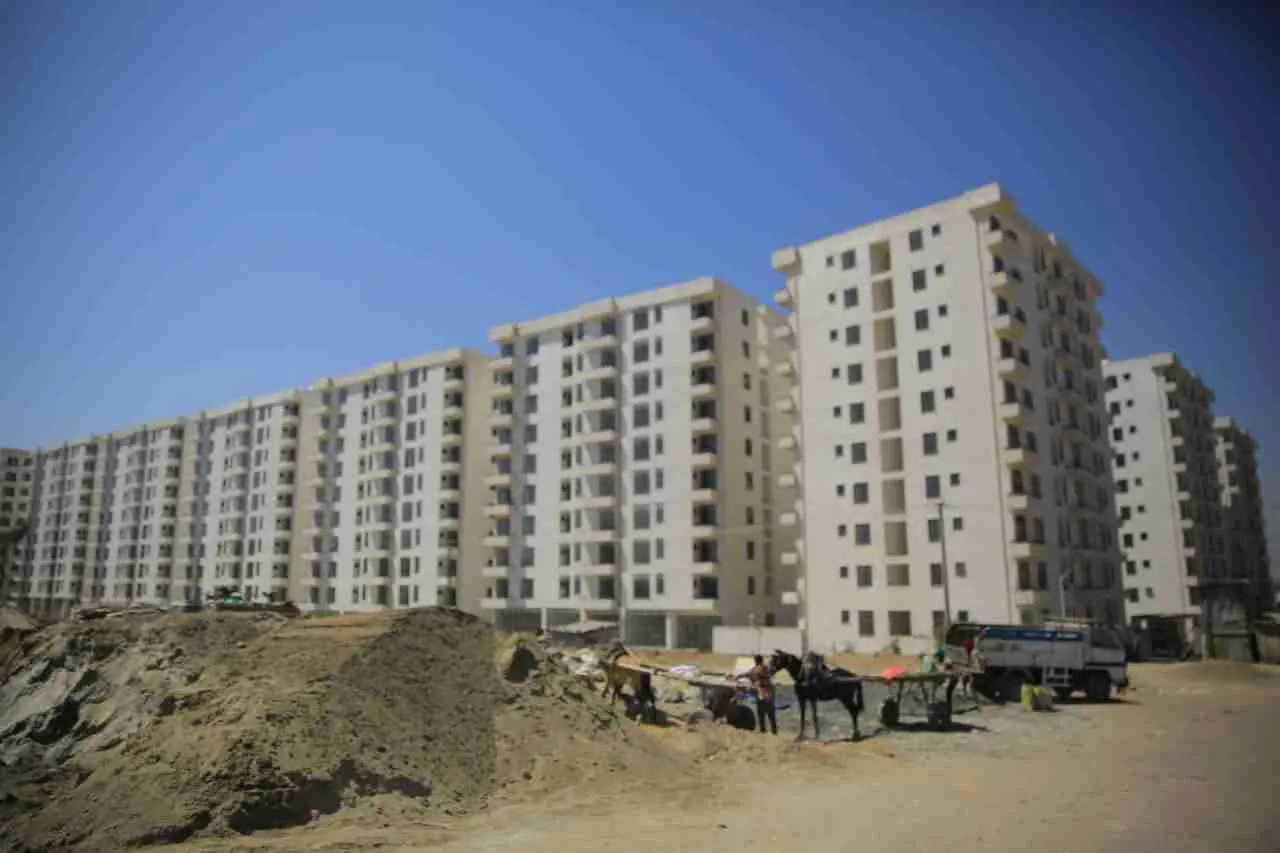
Another significant challenge, according to the business guru, was slowing loan repayments.
“Ethiopian banks face a rising number of non-performing loans (NPLs) tied to real estate projects, and this exposes the banking sector to systemic risks, as real estate lending accounts for a significant share of total loans,” Ermias remarked.
Alemayehu claims his company—Metropolitan Real Estate—draws from prior experiences in the US, Australia and Turkey. He argues a long-term solution to financing hurdles is necessary to bridge the gap between private developers and the low- and medium-income sections of society.
Nonetheless, financing and accessibility are not the only factors hampering the growth and expansion of the customer base in today’s real estate sector.
Biruk argues that Parliament’s recent ratification of a controversial property tax law and an even more contentious Asset Recovery bill have impacted the sector negatively, particularly by discouraging Ethiopians living abroad, who account for a large proportion of the market.
“The real estate sector, of all others, is very sensitive to market instability. Legislation being introduced should not be unpredictable and drastic. Such legislation scares homebuyers away,” said Biruk.
While exact figures are difficult to access due to limited data, the majority of real estate development activity in Ethiopia is concentrated in Addis Ababa, with significant demand for residential property driving demand. However, the market is evolving.
Data obtained from Statistica.com indicates that residential real estate accounts for the majority of market share, projected to reach a market volume of nearly USD 1.15 billion in 2025.
The market is anticipated to grow at 6.2 percent annually over the coming four years, resulting in a market volume of USD 1.7 billion, according to Statistica.com.
The real estate business, and construction as a whole, also suffers from quality issues and regulatory shortfalls.
Tsegaye Moshe, lead executive of housing development at the Ministry of Urban Development and Infrastructure, says the government is tightening its grip on both local and foreign developers looking for licensing.
“All licenses are being made to last only three years so as to make the Ministry more effective in regulation through close follow up,” he said.
Officials at the Ministry are currently busy overseeing the implementation of the country’s first proclamation governing real estate development, which was ratified a few months ago following years spent in the pipeline.
The proclamation prohibits foreign developers from operating on a pre-sale basis, and the country’s investment laws require them to hold at least USD 200,000 in capital before they can embark on a project.
“They must come up with the required financing,” said Tsegaye.
Still, even with improved financing and better oversight, the fact remains that most Ethiopians can ill afford the high property rates that define the real estate sector.
Biruk observes the construction industry needs to explore the idea of using locally available materials in order to solve the affordability issues plaguing the real estate business.
Ermias agrees.
“High inflation has drastically increased the cost of building materials, making housing unaffordable for many buyers,” he said, adding that developers needed to explore alternative construction materials and cost-saving building methods.
To Ermias, the present phase of “market correction” in real estate presents an opportunity to reshape the sector into a more sustainable, inclusive and investor-friendly industry.
He foresees that demand for affordable housing will continue to rise, while the market for higher-end real estate will continue to face challenges. Ermias calls for regulatory reforms to stabilize the market, while predicting that developers will eventually shift towards long-term leasing strategies.
“Real demand in Ethiopia is in the affordable and middle-income housing segments, and developers must pivot towards meeting the needs of first-time homebuyers and working-class families,” he said. “The Ethiopian market must transition away from speculative flipping towards build-to-rent and mixed-use development.”
Many executives at development firms, including Biruk and Alemayehu, agree that such a transition is necessary to offset the long-term erosion of both profits and customer base.
When that transition will come is difficult to say, and the real estate agents in Bole Medhanialem and elsewhere in the city are likely not going away any time soon as developers scramble to offload their stock on buyers who find it increasingly difficult to afford a home.