


Every Tir 11(January 19th), the Ethiopian and Eritrean Orthodox Tewahedo Churches mark Epiphany, or Timket, one of the most sacred religious observances, commemorating the baptism of Jesus Christ by John the Baptist in the River Jordan. Nowhere is this celebration more vibrant than in Gondar, a historic Ethiopian city that draws throngs of faithful and tourists alike to its unique festivities.
Rooted in Christian teachings, Epiphany, known as Aster’eyo in Ge’ez, celebrates the revelation of the Holy Trinity. It recalls the moment at the Jordan River when God the Father declared Jesus as His Son, and the Holy Spirit descended like a dove. The Ethiopian celebration transforms this event into a vibrant two-day religious festival.
The celebration begins with Ketera, the eve of Timket. On the afternoon of January 18, the clergy escort the Tabot—a replica of the Ark of the Covenant—out of churches to temporary tents, accompanied by devotees clad in traditional white cotton garments. These overnight vigils culminate in the main day’s ceremonies, where holy water is blessed and sprinkled on the crowd, symbolizing renewal and remembrance of Christ’s baptism.
RELATED POSTS


Gondar’s Unique Celebration
This year, more than a million attendees, including residents, pilgrims, and tourists, flocked to Gondar for the festivities.
“It was a uniquely colorful event,” said Abebe Lakew, Public Relations Head of the Culture and Tourism Bureau at Gondar City Municipality. “Unlike previous years, the celebrations were conducted peacefully, free from the security concerns that have plagued the region.
The Amhara region has faced periodic clashes between government forces and the paramilitary group Fano in recent years, but, according to Abebe, this year’s peaceful climate allowed the festivities to shine.
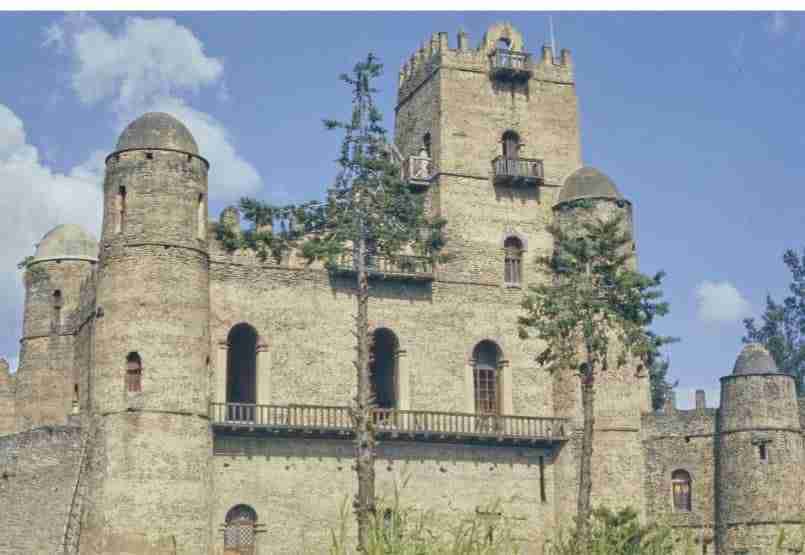
Adding to the event’s allure was the restoration of Gondar’s iconic castles, particularly Fasilides Castle, often dubbed the “Camelot of Africa.” The UNESCO World Heritage site has undergone significant rehabilitation, drawing praise and sparking debate over its preservation.
This year’s Timket celebrations saw a significant uptick in foreign visitors, many of whom also toured the Gondar castle complex. “Exact figures are still pending, but we observed a marked increase in international attendance, with hotels fully booked and dignitaries arriving from as far as Benishangul and Afar regions,” said Abebe.
A Controversial Restoration
While the restoration of Fasilides Castle illuminated its historical splendor, it also ignited controversy. Illuminated at night, the castles became a focal point of social media. Photos of the site’s bright white walls stirred conversations online, with some accusing authorities of neglecting the original character of the UNESCO World Heritage Site. The walls, known as egg walls orEnqulalGinb, were traditionally thought of as having been constructed out of wheat flour and eggs in place of mortar.
Critics took to social media to lament the “whitewashed walls” as a departure from the site’s historic appearance, which had aged to a golden-brown hue over centuries. Supporters and members of the restoration team defended the work, praising the restoration’s adherence to international standards.
Architect Ephrem Nigussie, a senior member of the restoration team, defended the project, stating that it adhered to UNESCO guidelines. “The original plaster, made from lime, had been buried beneath layers of patinas, algae, and oxidation.” He explained that the seeming whitewash is consistent with the castles’ initial appearance, revealed during cleaning.
“When cleaned, the original white color was revealed,” Ephrem explained. He noted that previous repairs had introduced composite mortars that were incompatible with the site’s original materials. “We reversed those changes using natural lime, as originally intended,” he said.
The restoration also addressed structural inaccuracies introduced by later modifications. A notable example of historical inaccuracy corrected during the restoration was the castle’s main staircase. “The Italians had installed large, weak stone blocks during their occupation. We replaced these with smaller basalt rocks, matching the original design,” Ephrem said.

The controversy has drawn comparisons to other heritage sites, such as the 900-year-old Sheikh Hussein Mosque, which retains its bright white appearance. Ephrem says, unlike the Fasilides Castle, the mosque has been receiving regular maintenance.
“The term white washing as used by people who painted negative pictures of the renovation is a total misnomer. It is called a lime treatment, and it has been done after successive tests and in line with a UNESCO Directive,” Mamo Getahun, Architect Conservator, who served as Design and Quality Supervision Team Coordinator for the Restoration told the Reporter Magazine.

“And what has been shown in social media posts of pictures and the realities on the ground are different. In the pictures the walls appeared whiter than what they actually look like in reality,” he said.
Prominent Ethiopian journalist and environmental advocate Seyoum Teshome praised the restoration effort, describing it as a vital step in preserving Ethiopia’s cultural heritage. “Those familiar with the castles’ weathered state cannot help but marvel at their rejuvenation,” he said.
Founded in 1636 by Emperor Fasiledes, Gondar marked a departure from Ethiopia’s tradition of shifting capitals. Its architectural grandeur, particularly the Fasil Gebbi complex, underscores the city’s historical significance.