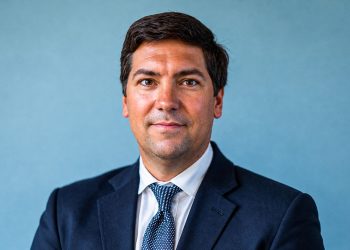


For 17 years, Henock Seyoum has traversed Ethiopia’s most remote and inaccessible corners as a travel journalist. For him, tourism is not just about destinations; it’s about the transformative experiences that connect people, places, and cultures. His journey has been one of exploration and storytelling, capturing the diverse tapestry of a country rich in culture, history, and natural wonders.
Today, with the wisdom gleaned from years on the road, Henock envisions a transformative future for Ethiopia’s tourism industry—one rooted in Experience Tourism and Mountain Tourism.
A Shift from Tradition
RELATED POSTS


Ethiopia’s tourism has long been defined by its traditional routes. The northern circuit, often referred to as the historic route, leads travelers to Axum, where ancient stelae stand as monuments to a powerful civilization. From there, it extends to the medieval castles of Gondar and the architectural marvels of Lalibela—12th-century rock-hewn churches that many regard as miraculous feats of engineering.
In contrast, the southern route offers a cultural immersion, showcasing the rich traditions and customs of Ethiopia’s diverse ethnic groups. Meanwhile, the eastern route highlights the country’s deep coffee heritage alongside its vibrant cultural elements.
While these routes remain essential, Henock argues they are no longer sufficient to sustain or grow Ethiopia’s tourism industry.
A Vision for Experience Tourism
Henock, a prolific author and advocate for sustainable tourism, believes the future lies in Experience Tourism. “The idea of traveling solely to see sights has been profoundly challenged by technology,” he explained to The Reporter Magazine. “Tourists can now explore destinations virtually through photos and documentaries. What they crave are authentic, immersive experiences.”
Experience Tourism goes beyond sightseeing. It invites travelers to engage directly with local communities and their environments—participating in daily activities and gaining firsthand insight into life at a chosen destination.
“This approach,” Henock noted, “does not require lavish hotels or expensive infrastructure. It emphasizes eco-friendly facilities and directs tourism revenue to local communities.” By doing so, it creates a win-win scenario: tourists leave more fulfilled, and host communities benefit economically.
“This approach has been proven profitable,” Henock explained. “It ensures that local communities receive a fair share of tourism revenues, while tourists engaged in such immersive experiences report greater satisfaction and a willingness to spend more.”
Despite its potential, Experience Tourism is not without challenges. Henock emphasized the need for community awareness. “Local people must understand how they can share their lives—whether through customs, food, or festivals—and, in turn, benefit economically,” he said. “Done right, Experience Tourism can foster meaningful connections and bring the world closer together.”
Rethinking Destination Development
Henock is critical of the idea that transforming attractions into destinations requires lavish infrastructure or the notion of luxury-focused destination development.
“Some argue that Ethiopia hasn’t transformed attractions into destinations,” he said. “While there’s merit to that argument, the real question is: what kind of infrastructure is necessary?”
For Henock, the answer is clear: simplicity. “Erecting a five-star glass hotel in the Bale Mountains National Park, for instance, is not the way forward. Travelers leave their cozy homes for something different—not a replica of what they already have.
Instead, Henock advocates for destination development that aligns with local realities and Ethiopia’s rural identity.
Rural Tourism: A Missed Opportunity
Henock pointed out that Ethiopia, a predominantly rural country, has yet to tap into the potential of Rural Tourism. “The vast majority of Ethiopians live in rural areas, and these communities hold untapped tourism potential,” he observed. Rural Tourism could bridge the gap between Ethiopia’s urban and rural divide while providing visitors with unique, authentic experiences.
Tourism experts specializing in rural and eco-tourism are aligning with Henock’s philosophy: tourist destination development need not hinge on expensive, capital-intensive infrastructure. Instead, the focus should be on community-based approaches that connect travelers with rural communities, natural landscapes, and traditional ways of life.
Community-based tourism fosters authentic interactions. Visitors can immerse themselves in local agricultural practices, participate in vibrant festivals, or experience traditional ceremonies. Henock, who hosts Travel Ethiopia, a television show dedicated to eco-tourism, underscores this approach:
“If we focus on community tourism, the cost of destination development is significantly reduced,” he explained. “Take the Menz and Guassa rural landscape, for instance. Developing eco-tourism there doesn’t mean building Sheraton-grade hotels.”
Henock cited the Choke Mountains in Gojjam as a successful example of this model. There, local farmers were introduced to the idea of supporting Experience Tourism. “Tourists join locals for early morning church services (a Senbete experience), help with harvesting, share meals in the homes of host farmers, and sleep in the community,” Henock described. “This immersive approach allows tourists to live the experience firsthand.”
Interestingly, Henock noted that tourists participating in such activities often pay as much—or more—than they would for luxurious accommodations. “The global trend is shifting toward travelers wanting to engage with local people and their daily lives,” he added.
The Untapped Potential of Mountain Tourism
Henock is equally passionate about Mountain Tourism, a sector he believes is underdeveloped in Ethiopia despite the country’s breathtaking mountain ranges. In one of his recent documentaries, Henock spotlighted Kundudo, a plateau in Eastern Hararghe that is home to a rare population of feral horses. The journey to this seemingly inaccessible plateau is as thrilling as encountering the horses themselves.
However, Henock lamented the growing degradation of Ethiopia’s mountains. “Many of our mountains and the resources they hold are under threat. Northern Ethiopia’s mountain chains, in particular, deserve urgent restoration efforts,” he said.
The ongoing conflict in the region, he acknowledged, has made environmental interventions even more challenging. Still, Henock remains steadfast in his belief that protecting Ethiopia’s mountains is vital for the future of its tourism industry.
Addis Ababa: A Potential yet to be realized
Turning his attention to the capital, Henock spoke candidly about the capitals shortcomings as a tourist destination. Despite being the political hub of Africa, housing the African Union and the United Nations Economic Commission for Africa (UNECA), the city lags behind other African capitals like Accra and Cairo.

“Addis Ababa has no fewer than 15 museums,” he pointed out, “but even our National Museum can be toured in under 20 minutes. Compare that to Nairobi’s National Museum, which takes an entire day to explore.”
Henock attributed Addis Ababa’s struggles to issues like noise, air, and visual pollution. However, he acknowledged efforts to improve the city’s infrastructure. “The new tourist-friendly projects across Addis are promising steps toward transforming it into a world-class destination.”
He highlighted the city’s natural appeal, with its uneven topography and proximity to stunning mountains such as Furi, Entoto, and Menagesha. “Addis offers a unique blend of urban and rural experiences. After enjoying a macchiato in the Great Rift Valley, travelers can return to the city for a cozy night.”
Traveling through Ethiopia’s rugged landscapes has not been without danger for Henock. He recounted a near-death experience while paddling along the Omo River. “I lost control of my boat near a rapid that plunged into a deep gorge. Local villagers rescued me after an intense struggle,” he recalled.
The country’s attractions are undeniably world-class, but Henock argues that transforming them into destinations requires a nuanced approach—one that prioritizes sustainability, local involvement, and authenticity over luxury.
As Ethiopia looks to the future, Experience and Rural Tourism offer a pathway to not only attract global travelers but also create a tourism industry that uplifts local communities and preserves the country’s rich heritage Henock believes.
Henock is the author of four books on a range of interrelated issues of travel, culture, nature and bits and pieces of history.