


Ethiopia is said to have implemented a National AI policy in June 2024 in an effort to succeed in its digital strategy goals by 2025 and to position Ethiopia as a center of AI development excellence in Africa by 2035.
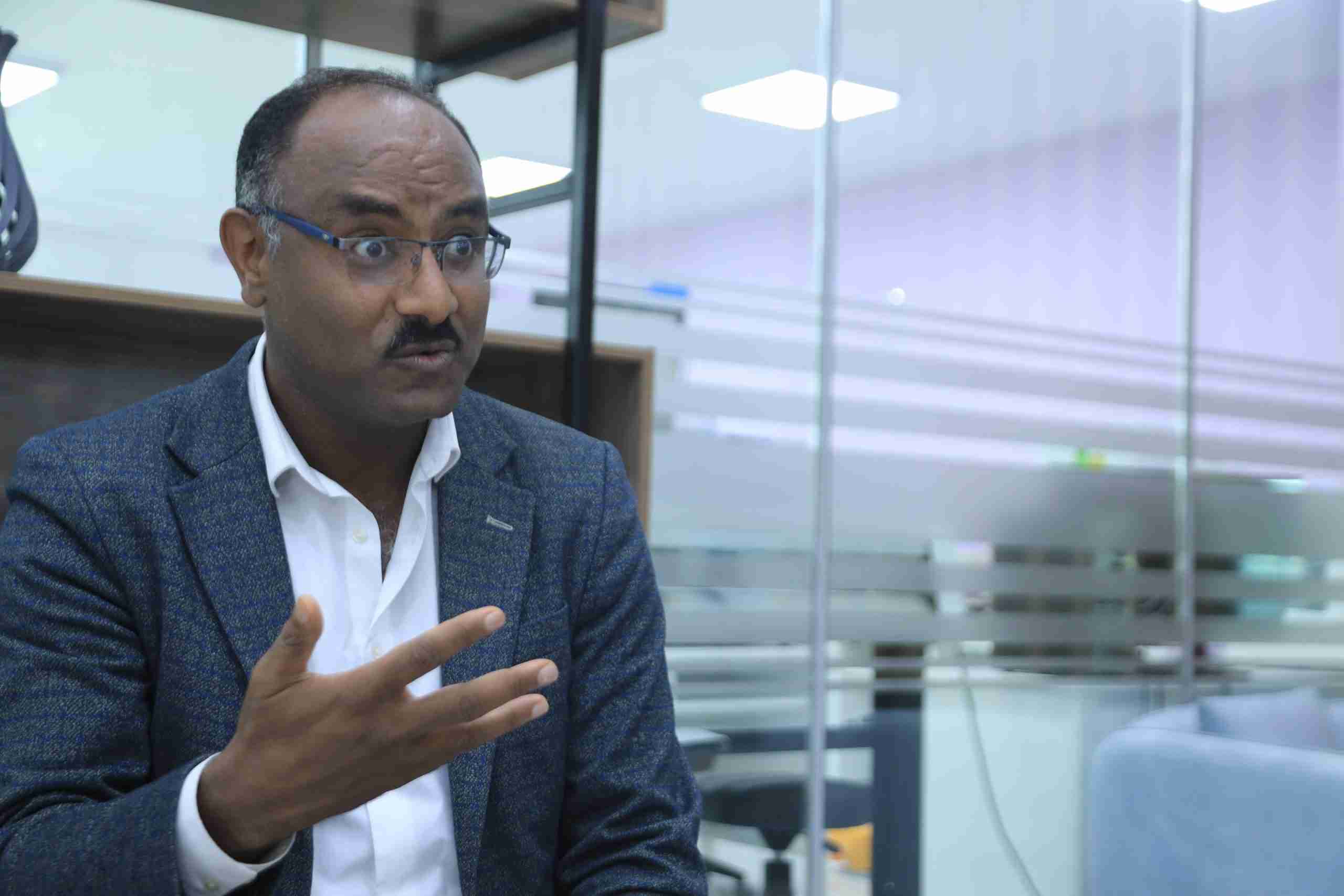
ZerubabelKibebe, a startup innovator at Ethiopia’s largest tech hub, the IT Park, is one of the people joining the AI industry. The Software Engineering Graduate from the University of Pretoria in South Africa, Zerubabel participated prominently in various nationally significant projects. He participated in the development of a satellite-based tracking system (a base system now in use by the Geospatial Institute of Ethiopia). He also developed a navigation system tailed for tourists. The Reporter Magazine’s Addis Getachew sat with him to learn more. Excerpts:
The Reporter Magazine: What activities or initiatives has your startup undertaken within the IT Park, the flagship tech innovation hub established by the Ministry of Innovation?


ZerubabelKibebe:I am the General Manager of BegizeOptiMAX. We are engaged in various technology-related innovation projects. One of the unique areas we have focused on is providing innovative solutions in Artificial Intelligence. As is well known, AI falls under a broad domain of technological disciplines. Our particular area of interest and activity relates to what is described as LLM (Large Language Models). We base our innovation activities on this popular model. Today, these LLMs are widely explored by AI companies and are among the most popular and effective in terms of serviceability and public adoption for commercial use. They are the most successful models to date, not only in terms of serviceability but also in their flexibility to be transformed into products and their rate of commercialization, as seen in the current global landscape. We have launched an AI product named Begize AI, which we are set to inaugurate soon.
What exactly is it?
To put it simply, think of a RIDE application that we all use. Behind the RIDE app, the engine running everything is Google. The RIDE app relies on at least four to five APIs (Application Programming Interfaces) to function. For instance, it calculates distance matrices and pinpoints geo-locations using AI. (Interestingly, we had created a similar system even before the introduction of Google Maps.) What we have done is integrate the OpenAI engine to operate in the background. Additionally, we bring together AI tools such as Gemini, OpenAI, Google, Anthropic, and Cloud APIs into our system. As a result, users subscribing to our AI system not only benefit from OpenAI’s functionalities but also gain the ability to create content using tools from Google, OpenAI, and others.
What types of content can users create using your AI product?
Primarily, our product focuses on generating text content, but users can also create image content and essentially any type of content that AI can produce. Why is this necessary? Some people, for instance, ask what sets our app apart from something like ChatGPT.
Many assume GPT is a product of a single company, but in reality, GPT (Generative Pre-trained Transformer) is a technical term used in the field of Artificial Intelligence. It refers to a model that, much like a human, provides data responses based on the training it has received. The concept is similar to teaching a child: the more they read, the more likely they are to answer questions correctly, as long as those questions come from the material they’ve studied.
In essence, GPT is an AI function trained to generate data. The quality and depth of the training directly impact the responses or feedback it can provide. With large datasets, numerous factors come into play in AI development. This is where “Prompt Engineering” becomes critical, and it’s an area where our product makes a significant impact.
What is Prompt Engineering? Could you tell us more about it and explain how you have incorporated it into your product?
Prompt engineering is essentially about optimizing how we interact with AI to get the best results. While the data has already been trained, the key question is: how do you effectively command or direct the AI to generate the desired data? This is particularly important because, when dealing with vast amounts of data, AI can sometimes experience “hallucination.”
Hallucination in AI occurs when it produces incorrect or irrelevant information because it’s processing and assessing trillions of data points. Our application acts as a filter to prevent such hallucinations. For example, a single user command might prompt the AI to sift through and analyze data across a wide range of fields—medicine, accounting, science, biology, and so on. Without proper guidance, the AI might wander into unrelated topics, producing inaccurate or irrelevant results.
Our prompts ensure that the AI focuses precisely on the requested information. For instance, if you request medical information, our system ensures the response remains within that domain. Furthermore, our prompts help users refine their queries. If a user makes an error in their command, the system detects it, corrects the command, and offers a list of accurate responses tailored to the query.
Desultory people may pick up data generated as a result of artificial hallucination. That is the danger of hallucination, in general. Our system came up with a solution.

If I understand it correctly, your innovation offers filters that provide users with solutions tailored to their specific needs and demands?
Exactly. That’s precisely what we’ve developed. You’ve used the right word—tailor-made. Our prompts are designed to deliver information and data that are custom-made for what users are looking for.
We have up to 400 such apps, all performing tailor-made tasks to meet the specific demands, convenience, and ease of our customers. These programs are part of our Prompt Engineering project and help reduce the risk of artificial hallucination that users might experience when using OpenAI alone.
What engines does our system use? In the background, our API integration includes engines like OpenAI, Gemini, Anthropic, Stable Diffusion, Pixel, PixBite, Surper, TTS, and more. If you use ChatGPT, you won’t find all of these engines integrated into one system. ChatGPT primarily uses DALL·E and OpenAI. Like ours, ChatGPT accesses OpenAI via API, as it’s API-based. An API is a way of interfacing applications.
That’s why I mentioned the RIDE application example earlier. While it’s true that you can reach a destination using Google Maps, our system enhances accuracy, thus improving the overall quality.
Who are your customers?
Our customer base is diverse, including various professionals. We currently have around 1,000 customers, even though we haven’t officially inaugurated yet. We plan to do so shortly.
But from what you’ve described, it seems like the OpenAI-driven ChatGPT can do the same things for me. So, what makes your system unique? Where is the added value?
To start off, not everyone gets full access to ChatGPT models. You need to subscribe to the service, which is priced in USD. As you know, only a handful of people can actually do that. Using our Prompt APP, we’ve been able to prevent hallucination, which is a key feature. Additionally, we offer more than 100 well-crafted, tailor-made applications designed to meet the specific needs of our customers. Our service also allows users to access all the AI tools available online, as we’ve integrated them into one system. This means you don’t need to subscribe to each individual service like ChatGPT, Gemini, Anthropic, Stable Diffusion, DALL·E, and others separately.
These are just a few of the added values we bring to AI operations. You won’t find all of these tools combined into one system anywhere else online or in any other AI application.
Do you believe AI could one day replace humans?
While AI may sometimes surpass humans in terms of presenting technically and critically perfect output, that, coupled with speed, does not replace the many traits we are endowed with as humans.
In the first place, AI is shaped to help you achieve your desired results; it does not shape you or your needs. For example, when it comes to writing, it is the human intent that matters. AI can help you write an article after an interview, assisting with greater accuracy and speed. However, it cannot guess your interviewee’s moods or mannerisms, which could be crucial for the article.
This is just the tip of the iceberg, I know, and as things evolve, the relationship between humans and AI may become more complex. But I reject the idea that AI will ultimately replace us.
In the near future, we will undoubtedly use AI-based process automation for repetitive tasks, and we are already seeing machines performing such tasks. We may eventually have AI performing repetitive tasks on its own, without human intervention. Over time, yes, some human decisions may be taken over by AI. This would be a significant transition, and could be regarded as a tectonic shift in technological advancement. Such capabilities may complicate the relationship between humans and AI. That’s for sure. But for now, we are not there yet.
I believe our education system may need to be overhauled. At some point, knowledge may become obsolete because we’ve already reached an era where anything we need can be found at our fingertips, instantly. The decisive factor in the future will be the ability to understand what you truly need and use the appropriate tools to obtain it.
How do you view the startup opportunity, and what was your experience? When do you plan to scale to a higher level?
Currently, there isn’t a specific opportunity for startups. However, the landscape is set to change with the government’s upcoming legal frameworks, which aim to differentiate startups from established businesses. These new regulations are expected to provide various incentives, marking a significant and forward-thinking initiative by the government.
What is your assessment of the current opportunities for startups in the country, particularly in the fields of coding and technology?
Ethiopia offers a wealth of opportunities for tech startups across various sectors, including digital payments, e-commerce, education, healthcare, and tourism. In my opinion, the most significant opportunity lies in being a startup within a large nation. As a country with considerable challenges, Ethiopia presents immense potential for innovation and problem-solving.
In contrast, smaller nations like Rwanda often focus on exporting their products and services to markets like Ethiopia. It is crucial for the Ethiopian government to prioritize and support its domestic startups to foster growth within its own market.
What are the main challenges you are currently facing in your startup journey?
Startups, especially in the technology sector, face numerous challenges, including limited access to capital, complex legal regulations, and inadequate funding opportunities.
However, the most significant challenge is the lack of trust in local technological skills. Ethiopians are fully capable of achieving what others can, as long as there is trust and confidence in our abilities and local expertise.
Specialization comes through practice, while innovation stems from the belief of “I can do it” and the ecosystem that supports this mindset. Other countries operate in a similar way.